
What are Claude Hybrid LLMs? How Hybrid Reasoning Works
January 29, 2026
January 29, 2026
April 30, 2026
April 30, 2026

Most people do not use AI to write code. They use it to summarize meetings, organize ideas, make decisions, and think through problems faster.
Some of those tasks need quick answers. Others require careful reasoning and context. That difference is where many AI tools fall short.
Claude hybrid LLMs are designed for everyday work. They respond quickly when speed matters and slow down when tasks require deeper thinking. The model adjusts its reasoning based on what you ask, without forcing you to manage settings or switch tools.
With newer Claude models, hybrid reasoning now supports real workflows like meeting analysis, planning, and follow-ups. For remote workers who rely on AI to stay focused and organized, this approach makes AI feel more reliable and useful.
In this guide, you will learn:
- What Claude hybrid LLMs are
- How hybrid reasoning works in practice
- Why this approach matters for daily work
What Are Claude Hybrid LLMs?
Claude hybrid LLMs are large language models designed to balance speed and deep reasoning inside a single model. Claude 3.7 Sonnet was introduced as the first hybrid reasoning model, combining standard responses and extended thinking within a single system.
At a high level, Claude hybrid LLMs:
- Combine fast responses with an extended thinking mode
- Use hybrid reasoning to scale effort per task
- Avoid switching between separate models
- Support long-running, multi-step workflows
With Claude Sonnet 4.5, this hybrid approach is no longer experimental. It now powers advanced coding, agent-based workflows, and complex reasoning tasks at scale.
This shift also enabled tools like Claude Code, which applies hybrid reasoning to real engineering workflows.
Understanding hybrid reasoning
Hybrid reasoning allows the model to shift between lightweight and intensive reasoning without changing models or tools.
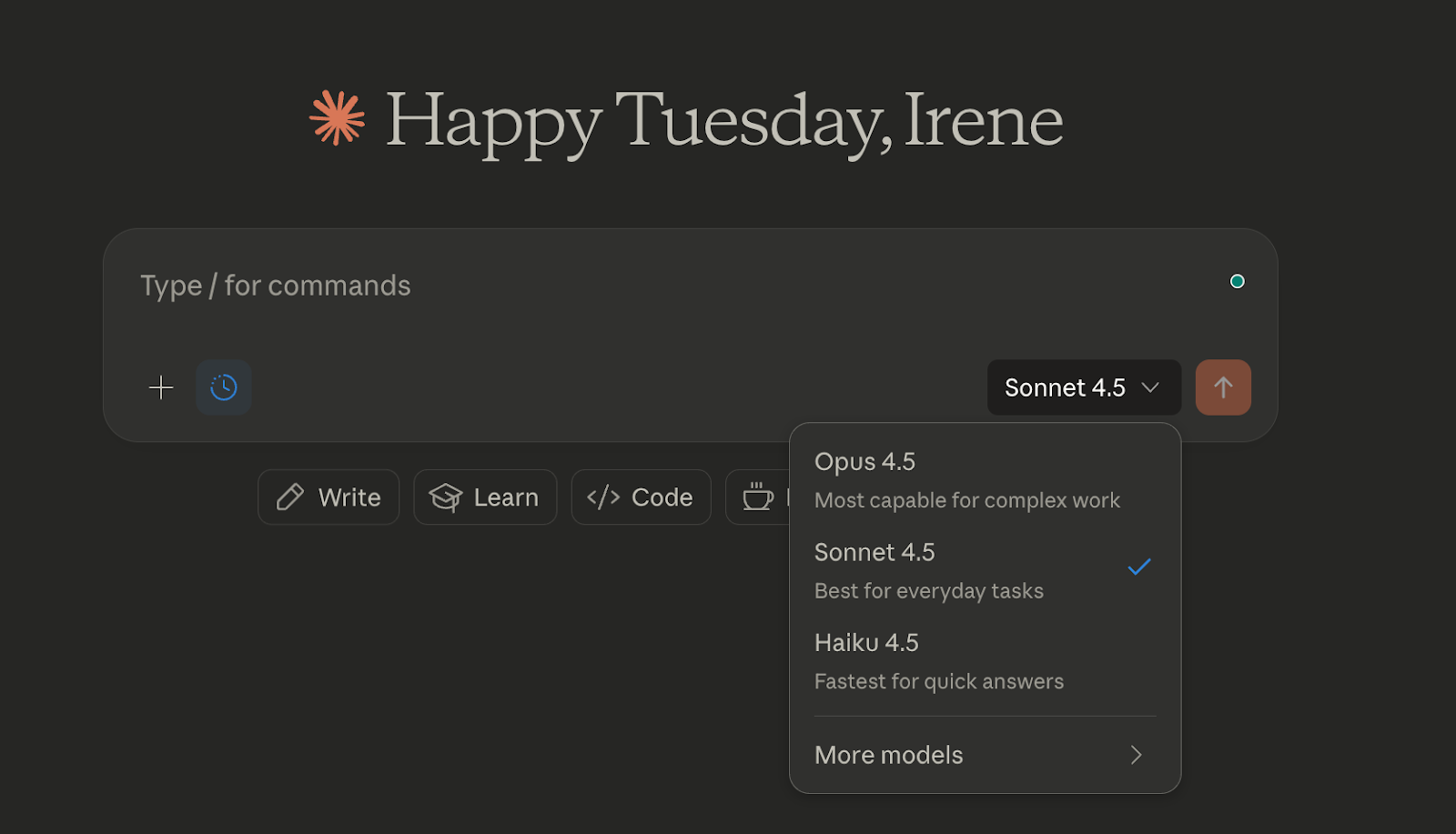
In practice, this means:
- Simple prompts trigger quick responses
- Complex problems activate step-by-step reasoning
- The model dynamically allocates test time compute
Previously, you had to manually choose which model you wanted for the specific prompt or task you’re working with. Hybrid reasoning mirrors how the human brain works, naturally switching between instinctive answers and deeper reflection.
Standard mode vs extended thinking mode
Claude operates in two modes that share the same core model.
Standard mode
- Behaves like a standard language model
- Optimized for speed and short tasks
- Uses minimal computing resources
Extended thinking mode
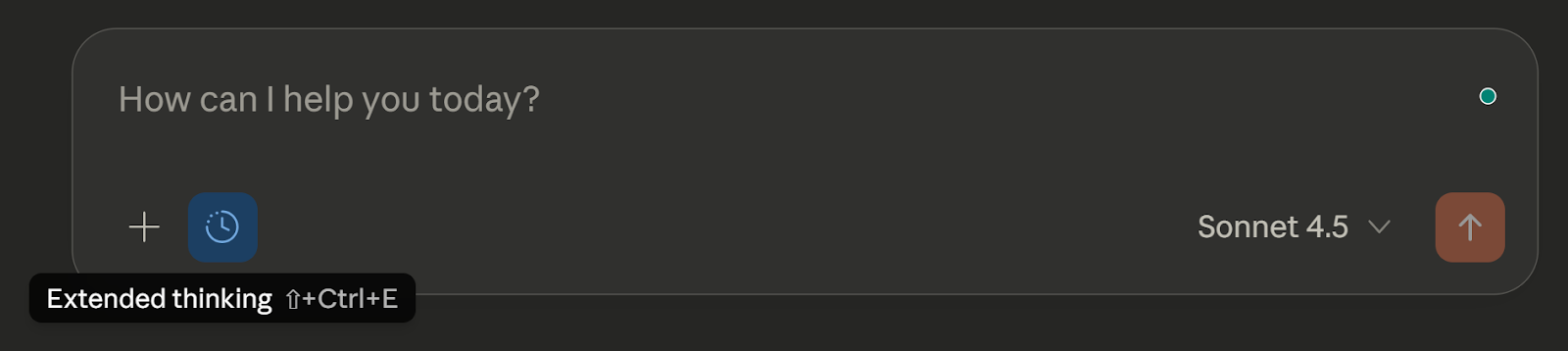
- Designed for complex problems
- Applies deeper reasoning capabilities
- Uses more compute for better accuracy
Both modes run inside a single model, not different models.
How Claude's architecture works
Claude’s architecture is built around variable resource allocation, not fixed behavior.
Key architectural traits include:
- The model decides how much computing power a task needs
- Developers can apply fine-grained control over reasoning limits
- Long-running tasks can maintain focus for hours
- Performance improves without changing the cost structure
With Claude Sonnet 4.5, this architecture now supports:
- Complex agent workflows
- Practical programming tasks
- Large and complex code bases
- Business and enterprise applications
This makes Claude one of the most mature hybrid reasoning models available today.
Key Features Of Claude Hybrid LLMs
Claude hybrid LLMs include a set of features that support both fast responses and deeper reasoning. These features explain how the model adapts to different tasks while keeping behavior predictable and costs stable.
Dual-mode operation
Claude runs as a single model with two reasoning paths.
This design allows it to:
- Deliver fast answers in standard mode
- Switch to extended thinking mode for harder tasks
- Avoid swapping between different models
The result is a more consistent experience across simple prompts and complex workflows.
Variable resource allocation
Claude uses variable resource allocation to decide how much computing power a task needs.
This means:
- Simple tasks use less computing power
- Complex problems get more test time compute
- Developers can cap reasoning to control costs
This approach helps optimize performance without changing pricing or workflows.
Visible thinking process
In extended thinking mode, Claude exposes its step-by-step reasoning.
This supports:
- Better debugging and validation
- Improved trust in model outputs
- Clear insight into how the model performs
For teams working on sensitive or high-stakes tasks, this added transparency matters.
Real-world task optimization
Claude’s hybrid reasoning shines in real workflows, not just benchmarks. Meetings are a good example.
Raw conversation data often lacks structure. Claude performs better when inputs are clean, ordered, and clearly labeled.
💡 Pro Tip: Use Tactiq to capture structured meeting transcripts before sending them to Claude. Formatted inputs help Claude's extended thinking mode focus on analysis, not cleanup.
This setup works especially well for:
- Action item extraction
- Strategic follow-ups
- Post-meeting analysis and planning
Comparing Claude Hybrid LLMs With Other AI Models
Claude’s hybrid approach stands out when you compare it to other reasoning models. The differences show up in how reasoning is handled, how much control users get, and how well the model supports real workflows.
Claude vs ChatGPT reasoning models
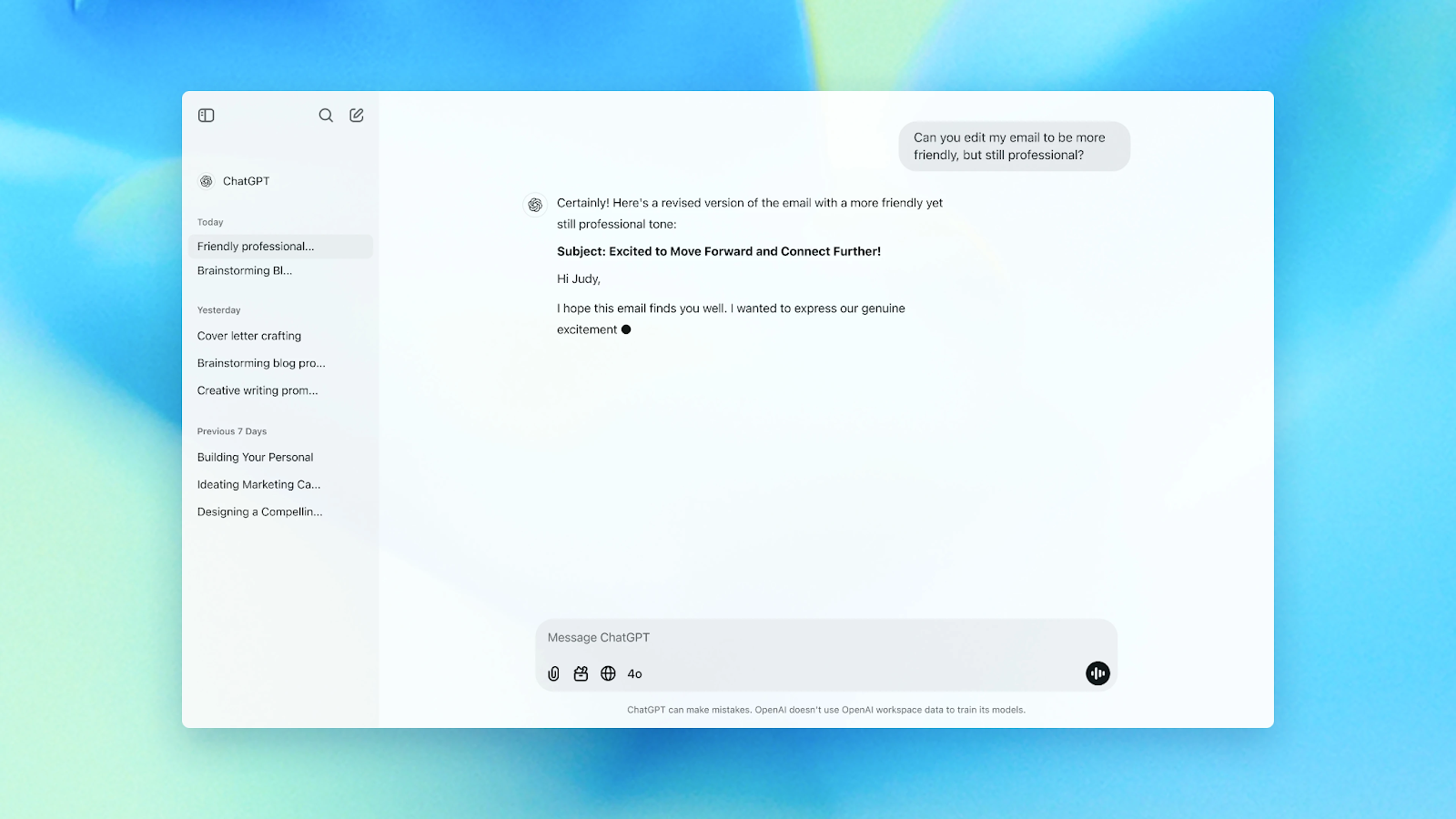
Claude and ChatGPT both support advanced reasoning, but they take different approaches.
Key differences include:
- Claude uses hybrid reasoning inside a single model
- ChatGPT relies on distinct reasoning-focused variants
- Claude offers fine-grained control over thinking time
- Claude emphasizes transparency with visible reasoning
Claude’s design reduces context switching and keeps workflows simpler for complex tasks.
Claude vs DeepSeek R1
DeepSeek R1 focuses heavily on raw reasoning performance, often pushing compute to its limits.
Compared to Claude:
- DeepSeek emphasizes benchmark performance
- Claude prioritizes practical, real-world tasks
- Claude balances cost structure and reasoning depth
- Claude supports longer, more stable workflows
Claude’s hybrid models are built for sustained work, not for short reasoning bursts.
Claude vs Gemini
Gemini models are tightly integrated into Google’s ecosystem and tools.
The main contrast:
- Gemini favors product-native workflows
- Claude offers broader flexibility across tools
- Claude supports an extended thinking mode with user control
- Claude adapts reasoning without locking users into one platform
For teams working across multiple systems, Claude’s hybrid approach provides more freedom.
Benefits of Using Claude Hybrid LLMs
Claude hybrid LLMs are designed to support real work, not just demonstrations. The benefits show up in how the model balances cost, accuracy, and control across different types of tasks.
Cost efficiency
Hybrid reasoning helps control how much computing power a task uses.
Key advantages include:
- Simple prompts run in standard mode
- Complex tasks use extended thinking only when needed
- Pricing stays the same across modes
This makes Claude easier to budget for compared to other models that require separate pricing tiers.
Improved accuracy for complex tasks
For complex problems, deeper reasoning matters.
Claude’s extended thinking mode improves:
- Multi-step analysis
- Long-form planning
- Practical programming tasks
- Work across complex code bases
Early tests suggest significant improvements in reasoning accuracy compared to previous models.
Flexibility and control
Claude gives users direct control over how the model performs.
This includes:
- Setting reasoning limits
- Adjusting speed versus depth
- Applying the same model to different tasks
This flexibility helps teams tailor Claude for their own purposes without changing tools.
Enhanced transparency
Hybrid reasoning supports clearer outputs.
With visible step-by-step reasoning, teams can:
- Review how conclusions were formed
- Spot errors earlier
- Build trust in model outputs
This level of transparency is especially valuable for enterprise and regulated environments.
For teams evaluating trust and risk, it also helps to understand how safe Claude AI is, including how the model handles alignment and misuse.
How To Make The Most Of Claude Hybrid LLMs For Your Meetings
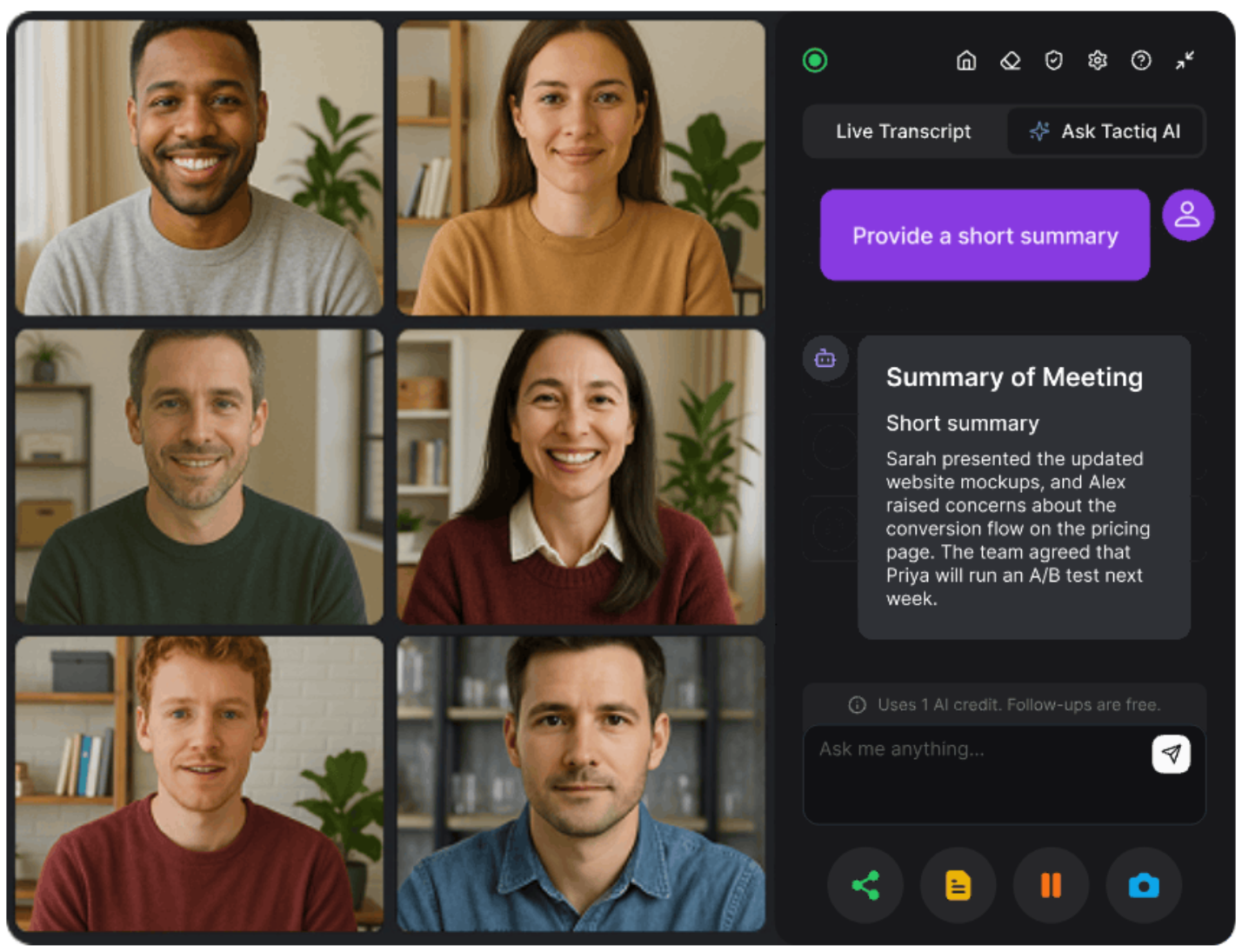
The real value of hybrid reasoning shows up when accuracy, context, and follow-through all matter. Meetings are a clear example. They generate complex information that often needs more than a quick summary.
Claude hybrid LLMs work best with structured inputs. Raw transcripts slow reasoning down. Clean, organized data allows the model to apply an extended thinking mode, where it adds the most value.
Tactiq supports this workflow by preparing meeting data before it reaches the model.
Tactiq captures real-time transcripts and AI summaries across Zoom, Google Meet, and Microsoft Teams. It identifies speakers, highlights decisions, and automatically pulls out action items.
When passed into Claude’s hybrid reasoning model, this formatted data enables:
- Deeper analysis using extended thinking
- Accurate action item extraction
- Strategic insight across long discussions
- Clearer follow-up planning
Tactiq also formats meeting content in a way that aligns with how Claude reasons. Key points are grouped logically, helping the model focus its computation on analysis rather than cleanup.
Ready to turn meetings into structured data? Download the free Tactiq Chrome Extension and start automatically capturing transcripts and summaries.
{{rt_cta_ai-convenience}}
Wrapping Up
Claude hybrid LLMs change how reasoning works in modern AI systems. Instead of forcing users to choose between speed and depth, Claude blends both inside a single intelligent model. Standard mode handles quick tasks. Extended thinking mode supports complex analysis, coding, and long-running work.
With newer models like Claude 4.5, hybrid reasoning now supports real business workflows at scale. Costs stay predictable. Control stays in the user’s hands. Transparency improves trust in outputs.
When paired with Tactiq, Claude’s strengths go further. Clean transcripts and structured summaries give the model better inputs, which leads to stronger insights and clearer actions.
If meetings drive decisions in your work, this combination turns conversations into data you can actually use.
FAQs About Claude Hybrid LLMs
What is Claude's hybrid reasoning?
Claude’s hybrid reasoning allows a single AI model to handle both fast responses and deep analysis. The model adjusts how much reasoning and computation it uses based on task complexity, instead of switching between separate reasoning and non-reasoning models.
How does Claude's hybrid reasoning work?
Claude uses variable resource allocation to scale its reasoning. Simple prompts run quickly in standard mode, while complex problems activate extended thinking mode, where the model reasons step by step before producing a response.
What is the difference between standard mode and extended thinking mode in Claude?
Standard mode prioritizes speed and short responses. Extended thinking mode uses more computing power to reason through complex tasks, multi-step problems, and long workflows. Both modes operate within the same Claude model.
What are the benefits of Claude's hybrid approach?
Claude’s hybrid approach improves accuracy on complex tasks, keeps costs predictable, and gives users control over reasoning depth. It also increases transparency by allowing step-by-step reasoning, which helps teams review and trust model outputs.
How can I leverage Claude's capabilities for my meetings?
Use Tactiq to capture structured transcripts and summaries from Zoom, Google Meet, or Microsoft Teams. Feeding this data into Claude helps extract action items, analyze discussions, and generate strategic insights using extended thinking.
Related articles








Want the convenience of AI summaries?
Try Tactiq for your upcoming meeting.
Want the convenience of AI summaries?
Try Tactiq for your upcoming meeting.
Want the convenience of AI summaries?
Try Tactiq for your upcoming meeting.