
What is Claude Mythos? Is It for Remote Professionals?
August 17, 2026
August 17, 2026
September 30, 2026
September 30, 2026

You've probably seen "Claude Mythos" mentioned somewhere online, maybe in a headline about AI and cybersecurity. If you use Claude for meetings or everyday work, you might wonder if this changes anything for you.
It doesn't. Claude Mythos is a separate model built for a very different purpose than the AI you rely on day-to-day.
- What Claude's new model Mythos actually is, according to Anthropic
- Whether it changes anything about your everyday AI tools
- Which Claude models work well for daily workflows
- Claude Mythos pricing and access details
- How Claude Mythos differs from Claude Fable 5
Claude Mythos: What Is It?
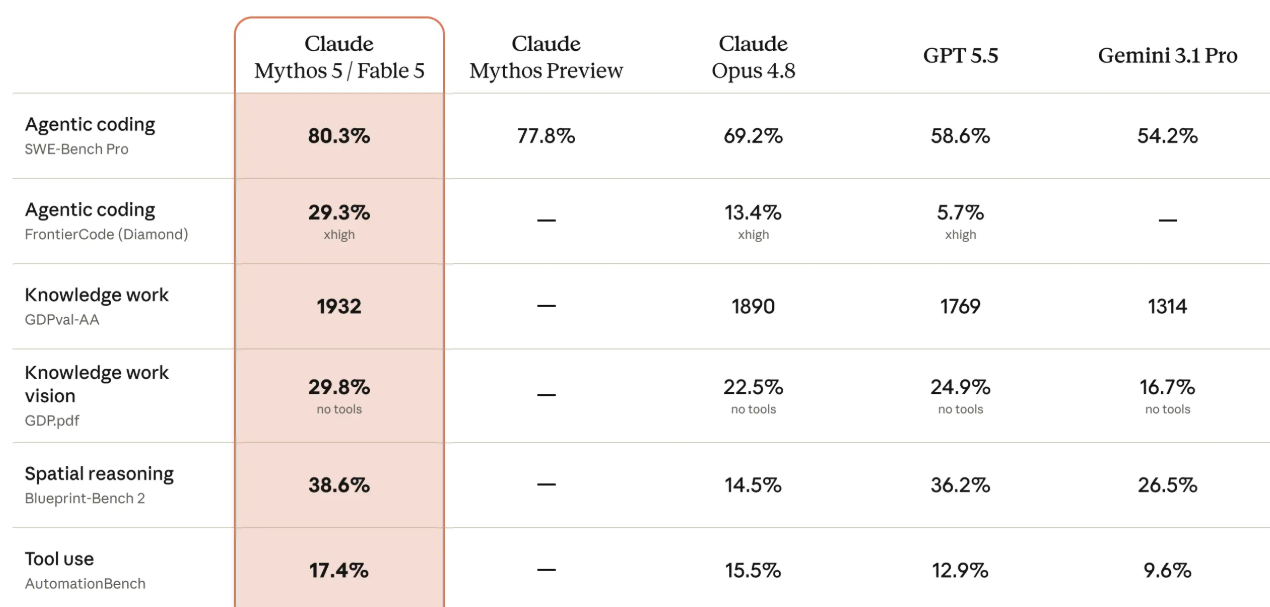
Claude Mythos is Anthropic's most advanced model tier, sitting above Claude Opus. It represents the current ceiling of what Claude's models can do, particularly in coding and complex reasoning tasks. That's what Claude Mythos is, according to Anthropic: a new model built specifically for high-stakes technical work, not everyday use.
- Claude Mythos 5, the current version, launched in June 2026, alongside its public counterpart, Claude Fable 5.
- Both share the same underlying model, but Fable 5 includes additional safety measures that Mythos 5 does not.
- Anthropic restricts broad access to this new model mainly because of cybersecurity risk.
None of this changes what you need for day-to-day meeting work: a clean transcript for whichever Claude model you use, which is what Tactiq provides. Tactiq is a meeting transcription and AI summarization platform that captures your Zoom, Google Meet, or Microsoft Teams calls in real time, so you always have accurate notes ready to hand off to Claude.
💡 Pro tip: Tactiq’s built-in AI can generate the summary and action items automatically, so you don't need Claude at all unless you want deeper analysis.
What Claude Mythos Is Actually Used For
Claude Mythos’ capabilities center on one narrow purpose: cybersecurity research at a scale most human teams can't match.
- Anthropic uses Mythos to scan software for vulnerabilities through Project Glasswing, a coalition effort to secure critical infrastructure before attackers find the same flaws.
- Glasswing partners have used Mythos to find vulnerabilities across every major operating system and web browser, along with thousands of other flaws in critical software.
- The model can demonstrate how a vulnerability could be exploited, which is part of why Claude Mythos access stays tightly controlled.
- Coding benchmarks are another use case, since Mythos performs at or beyond the level of the most skilled human researchers on complex, multi-step coding tasks.
This is a general-purpose model, but Anthropic is deploying it first for security work, not everyday productivity. Its access reflects that focus.
What Claude Mythos Means for Your Everyday AI Tools
Even though Mythos is general-purpose under the hood, it has no connection to the AI tools you use for writing, coding, analysis, or meetings.
- Claude Mythos access stays restricted to Project Glasswing partners working on cybersecurity and coding research.
- It isn't available in Claude.ai, the Claude API for general use, or any everyday productivity tool.
- Writing and software development together account for nearly half of all Claude usage, according to Anthropic's own data, and neither of those workflows touches Mythos at all.
- The Claude models actually doing that everyday work, like Sonnet and Opus, connect to your other tools through Claude connectors. Neither has any connection to Mythos or its restrictions.
- Claude Fable 5, the public counterpart released alongside Mythos, is available broadly for everyday Claude use. It includes safety measures Mythos lacks.
Which Claude Models Work Well for Daily Workflows?
Sonnet and Opus handle most everyday work, from writing to coding to analysis. The right pick depends on the task, not a fixed ranking.
- Claude Fable 5 vs. Opus 4.8 breaks down when to use each.
- Claude AI Cost covers current pricing across models.
- Claude's system prompt explains how safety settings shape responses.
Better output starts with better input. Tactiq MCP, currently in beta on Tactiq's Business plan, connects your meeting transcripts directly to Claude so you can pull past decisions into a prompt on demand.
Mythos sits outside all of this, but if your company works in security or software research, it might still be worth knowing what access actually costs.
{{rt_cta_ai-convenience}}
Claude Mythos Pricing and Access
Claude Mythos stays limited to vetted Project Glasswing partners and approved organizations. There's no general sign-up, so most companies won't have a path to it even if they wanted one.
Claude Mythos pricing:
- $10 per million input tokens
- $50 per million output tokens
The same rate applies to Claude Fable 5, and both sit well above what most teams pay for everyday Claude plans.
Claude Fable vs Mythos: Why the Distinction Matters for Everyday Users
Claude Mythos and Claude Fable 5 share the same base model, but that's where the similarity stops for most users.
- Both launched in June 2026, and both run on the same underlying model architecture.
- Claude Fable 5 includes safety classifiers that can decline high-risk requests, as defined by Claude's system prompt and safety settings. It covers areas like cybersecurity, biology, and chemistry.
- Claude Mythos 5 does not include those classifiers. This is why it stays restricted to vetted Project Glasswing partners instead of general release.
- Fable 5 is the version available through Claude.ai, the Claude API, Claude Code, and Claude Cowork. This makes it the model most people will actually interact with.
For everyday users, the distinction comes down to this: Fable 5 is built for general use, Mythos 5 is not, and you likely already interact with neither for meeting-related work.
Claude Mythos Doesn't Change Your Everyday AI Workflow
Claude Mythos is a cybersecurity research model, built to find and demonstrate software vulnerabilities at a scale most human teams can't match. It's not for remote professionals, and it was never meant to be.
Nothing about Mythos changes how you write, code, analyze, or run meetings with Claude. Sonnet and Opus remain the models built for that daily work, completely separate from Mythos and its restrictions. Claude Fable 5 covers general use for anyone who wants Mythos-class reasoning without the security-first limits.
If your workflow already runs on Claude and Tactiq, nothing here changes it. The headlines about Mythos are about a different tool solving a different problem.
Claude Mythos is used for cybersecurity research, mainly through Project Glasswing. Partners use it to find and demonstrate software vulnerabilities before attackers can exploit them.
No. Claude Mythos access stays limited to vetted Project Glasswing partners and approved organizations. Claude Fable 5, its public counterpart, is available to everyone.
Both share the same base model. Fable 5 includes safety classifiers for high-risk requests, while Mythos 5 does not, which is why Mythos stays restricted.
Claude Mythos pricing is $10 per million input tokens and $50 per million output tokens, the same rate as Claude Fable 5.
Give Claude clean, complete input, whether that's a document, a dataset, or a meeting transcript. Tools like Tactiq capture that context automatically from Zoom, Google Meet, or Microsoft Teams.
Related articles








Want the convenience of AI summaries?
Try Tactiq for your upcoming meeting.
Want the convenience of AI summaries?
Try Tactiq for your upcoming meeting.
Want the convenience of AI summaries?
Try Tactiq for your upcoming meeting.