
Which Claude Model Is Best for Writing and Research?
September 1, 2026
September 1, 2026
September 1, 2026
September 1, 2026

Anthropic runs several Claude models at once. Picking the right one among the many AI tools available now shapes both your output and your budget.
As of August 2026, the lineup includes Haiku 4.5, Sonnet 5, Opus 5, and Fable 5, plus the invite-only Mythos 5. Each one trades off speed, cost, and reasoning power differently, so picking the wrong one wastes either your time or your budget.
A model built for quick drafting can fall flat on a 40-page research synthesis, and a model built for deep reasoning is overkill for routine writing. This guide breaks the decision down by:
- What each current Claude model is built for, at a glance
- Which model wins for research
- Which model wins for writing
- A simple decision path to pick the right model fast
TL;DR: Which Claude model is better for writing and research?
Sonnet 5 is the strongest all-around choice for everyday writing and research. Opus 5 takes over for harder reasoning, like a dense report or multi-step analysis.
Fable 5 handles frontier, long-running jobs, like huge document sets or hours-long agentic work. Haiku 4.5 covers high-volume, simple tasks at the lowest cost.
But for meeting-based work, Tactiq is the missing piece no matter which Claude model you use. It transcribes your Zoom, Google Meet, and Microsoft Teams calls in real time and turns them into summaries any model can work from.
The Current Claude AI Model Lineup

Anthropic's naming can be confusing since each model family updates on its own schedule. Here's a quick breakdown of what's available right now and what each one is built for.
Claude Haiku 4.5
Haiku 4.5 is the fastest, cheapest model in the lineup. It's best for high-volume, simple tasks like classification, extraction, and short replies. It's priced at $1 per million input tokens and $5 per million output tokens, with a 200K token context window.
Claude Sonnet 5
Sonnet 5 is the default, balanced model for most professional work. It's best for everyday writing, research synthesis, and multi-step reasoning. It's priced at $2 per million input tokens and $10 per million output tokens, with a 1M token context window.
Claude Opus 5
Opus 5 is the model for genuinely hard problems. It's best for complex coding, deep analysis, data analysis, and long agentic chains, making it a strong coding model for harder engineering work. It's priced at $5 per million input tokens and $25 per million output tokens, with a 1M token context window.
Claude Fable 5
Fable 5 is the most capable model, built for frontier and long-running work. It's best for huge document sets and multi-day autonomous tasks. It's priced at $10 per million input tokens and $50 per million output tokens, with a 1M token context window.
Mythos 5 sits above Fable 5 as Anthropic's most capable model, but it's invite-only through Project Glasswing rather than generally available. It shares Fable 5's specs and pricing, minus some of Fable 5's built-in safety guardrails.
For a closer look, see what Claude Mythos is and whether it matters for your work. For a full cost breakdown across plans (Claude Pro, Max, etc.), check out what Claude actually costs.
Which Claude AI Model Is Best for Research?
The right Claude model for research depends on how much material you're working through. It also depends on how hard the reasoning gets.
Sonnet 5
Sonnet 5 handles most everyday research well. On GDPval-AA, Anthropic's benchmark for economically valuable knowledge work, Sonnet 5 actually edges out Opus 4.8 (1,618 vs. 1,615 Elo). That means it holds up on tasks like summarizing a competitor's pricing page or drafting a research memo from a few sources. It does this without needing a pricier model.
Opus 5
Opus 5 is the stronger pick once the reasoning gets harder. It currently tops that same GDPval-AA benchmark, ahead of both Fable 5 and GPT-5.6 Sol. That makes it Anthropic's best-performing model for professional research work as of this writing.
It also leads on ARC-AGI-3, a benchmark built to test genuinely novel problems, like puzzles the model has never seen and gets no instructions for. That points to real gains in deep reasoning.
Fable 5
Fable 5 is built for the largest research jobs. Its 1M-token context window lets it reason across an entire folder of papers or reports in one pass. It suits multi-source literature reviews and research agents that run for hours unsupervised. For a single research session, that scale is usually overkill.
For a full side-by-side on benchmarks and pricing across the lineup, see this detailed Claude model comparison.
Which Claude Model Is Best for Writing?
The best Claude model for writing depends on what kind of writing you're doing. Business copy and creative fiction reward different strengths.
Sonnet 5 for everyday drafting
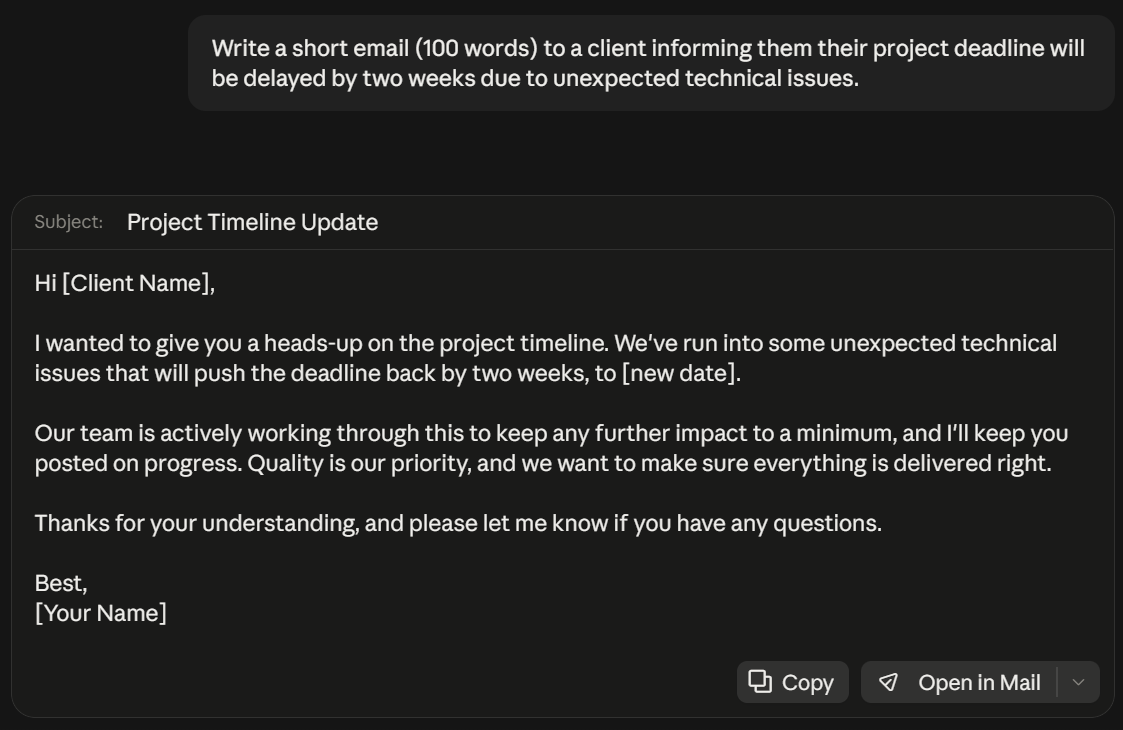
Sonnet 5 is the strongest default for everyday writing. It produces clean, natural prose for emails, blog posts, and marketing copy. It costs less than the tiers above it.
In blind writing tests, Sonnet 5 read as clear and well-paced. Reviewers noted it leans toward safer, tidier choices than Fable 5 or Opus 5. For most business writing tasks, that's exactly the tradeoff you want.
Fable 5 for creative writing
Fable 5 tests as the strongest raw creative writer in the lineup. Independent blind reviews found it produced sharper line-level choices than Sonnet 5 or Opus 4.8.
It also handled moral complexity better in blind tests, building arguments a character could actually defend instead of an easy answer. If your work leans into fiction, brand storytelling, or broader content creation, Fable 5 is worth the premium.
Opus 5 for analytical and technical writing
Opus 5 sits between the two. It handles long-form analytical writing and technical documentation well. Accuracy and reasoning depth matter here alongside the prose itself.
It's a reasonable pick for academic or professional writing, like a thesis or legal brief, where the argument matters as much as the style.
There's no single best model for every writing task, so matching the model to the job matters more than picking a favorite.
For a deeper look at how Claude's writing holds up against other tools, see Claude vs. Gemini vs. ChatGPT for writing.
Which Claude Model Is Best for Meetings and Meeting Notes?
None of Claude's models can join a meeting or hear what was said. The model you pick matters far less here than what you feed it.
A clean, structured transcript beats a top-tier model working from vague recall every time. Meeting notes are only as good as the raw material behind them.
How Tactiq connects your meetings to Claude
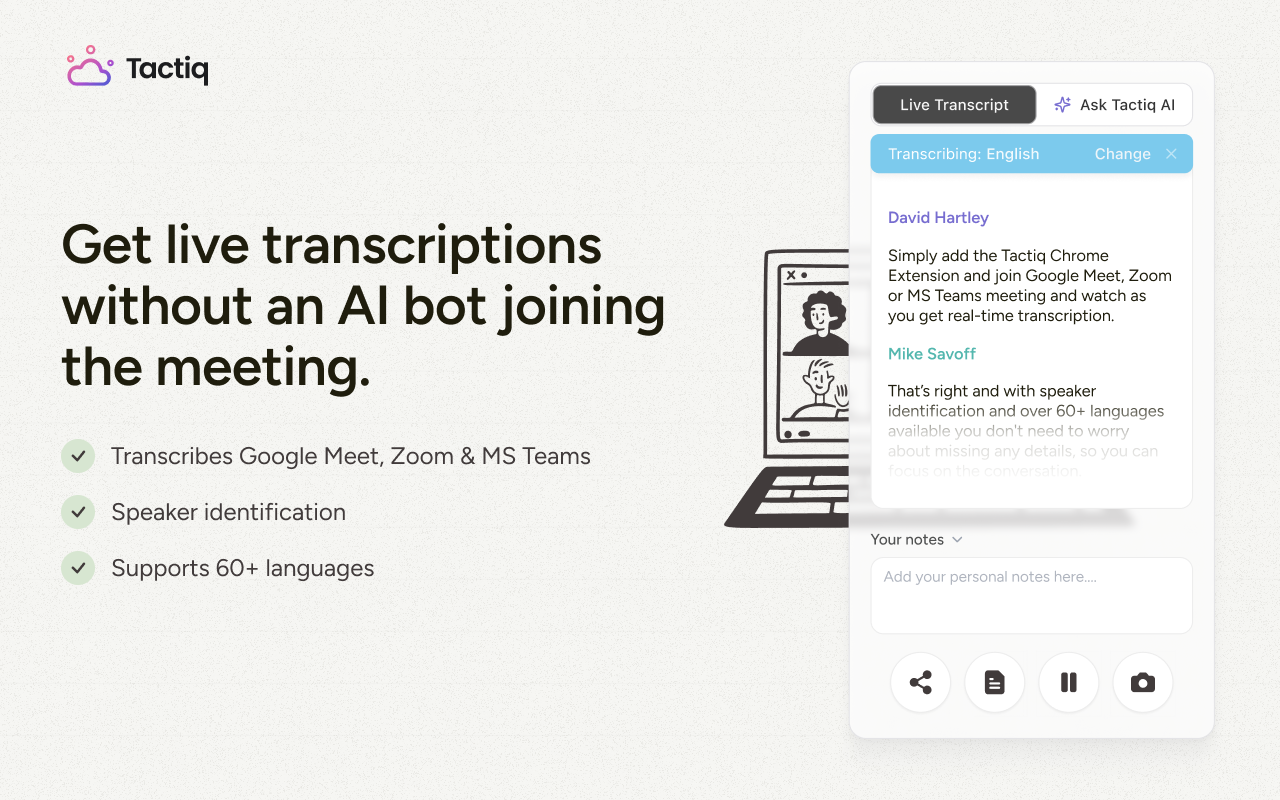
Tactiq is a Chrome extension that transcribes Zoom, Google Meet, and Microsoft Teams calls in real time, with no bot.
Once connected, the Tactiq MCP server gives Claude direct access to that transcript history, so any model in the lineup can search past calls, pull summaries, or surface action items without a manual export.
Setting it up takes a few steps:
- In Claude, go to Customize > Connectors, then click Add > Browse connectors.
- Search for Tactiq and click Connect to Claude.
- On the Tactiq screen, click Allow to authorize the connection.
- From a new chat, click the plus sign (+) > Connectors, and confirm Tactiq MCP is enabled.
From there, the model you're using, whether that's Sonnet 5 for a quick recap or Opus 5 for a deeper analysis of a client call, works from the same clean transcript.
For a broader look at what's available, see the best connectors for Claude.
{{rt_cta_ai-convenience}}
Claude Model vs. Claude Plan: Don't Confuse Them
A Claude model and a Claude plan solve two different problems. Mixing them up is the most common source of confusion when picking Claude for your team.
The model determines capability: how well Claude reasons, writes, or handles a large document. Haiku 4.5, Sonnet 5, Opus 5, and Fable 5 are all models.
The plan determines access: how much you can use, which models you can access, and what team controls come with it.
Here's how the current plans break down by model access:
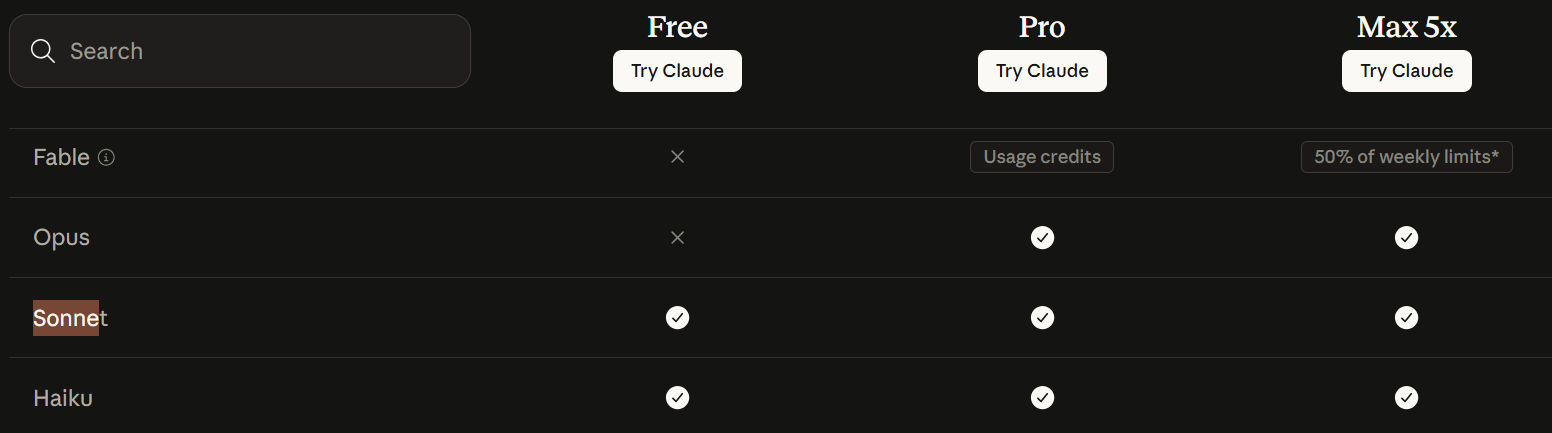
- Free ($0/month): Sonnet 5 and Haiku 4.5, with a 200K context window. Opus 5 and Fable 5 aren't available at all.
- Pro ($20/month, or $17/month billed annually): adds Opus 5, plus Fable 5 through usage credits. Same 200K context window.
- Max 5x ($100/month) and Max 20x ($200/month): both include Fable 5 at up to 50% of your weekly limits, plus Opus 5 and Sonnet 5. Same 200K context window as Free and Pro. The only difference between the two Max tiers is usage capacity, not model access.
- Team: standard seats ($25/seat/month, or $20/seat/month billed annually) include Opus 5, Sonnet 5, and Haiku 4.5, with a 200K context window and Fable 5 on usage credits. Premium seats ($125/seat/month, or $100/seat/month billed annually) include Fable 5 as a standard part of the plan, same as Max. Both seat types include Claude Code.
- Enterprise: on seat-based Enterprise plans, standard seats work like Pro and premium seats work like Max. On usage-based Enterprise plans, all models, including Fable 5, bill at standard API rates, plus a 500K context window on the default model.
So a Free user and a Max user might both be "using Claude," but only one of them can reach Opus 5 or Fable 5 without hitting a wall. Picking the right plan matters just as much as picking the right model.
How to Choose the Right Claude Model (Quick Decision Guide)
Picking a Claude model doesn't need to be complicated. Match the model to the task, not the other way around.
- High-volume, simple tasks (classification, extraction, quick replies): choose Haiku 4.5. It's fast and cheap, and the quality holds up for straightforward work.
- Everyday work (business writing, research synthesis, most professional tasks): choose Sonnet 5. It's the default for a reason: strong output at a lower cost than the tiers above it.
- Hard or complex tasks (deep analysis, nuanced writing, multi-step reasoning): choose Opus 5. It's built for problems where getting the answer right matters more than getting it fast.
- Frontier or long-running work (huge document sets, multi-day autonomous jobs, the largest research projects): choose Fable 5. It's the most capable model in the lineup, priced and built accordingly.
If you're still unsure, start with Sonnet 5. It handles most tasks well, and you can always move up a tier if the output falls short.
Which Claude Is Better? Choosing the Right Model
There's no single best Claude model. The right choice depends on the job.
The same logic applies to meetings. No Claude model can sit in on a call or capture what was said. Tactiq fills that gap, turning every Zoom, Google Meet, and Microsoft Teams call into a clean transcript any model can work from.
Add Tactiq to Chrome for free and give whichever Claude model you choose something solid to work with.
Sonnet 5 handles most everyday research and deep research tasks well. Opus 5 is the stronger pick for harder reasoning. Fable 5 suits long documents, like reasoning across an entire folder of files in one pass.
Sonnet 5 is the strongest default for everyday writing, like emails and blog posts. Fable 5 tests as the strongest raw creative writer. Opus 5 handles long-form analytical and technical writing where accuracy matters as much as style.
It depends on the task. Opus 5 uses extended thinking mode to work through harder reasoning and complex analysis. Sonnet 5 matches or beats it on everyday knowledge work at a much lower cost across different tasks.
A model determines capability, like Sonnet 5 or Opus 5. A plan, like Pro or Max, determines how much you can use and which models you can choose from. Free and Team, for example, don't include Fable 5.
No Claude model can join a meeting or capture what was said. Connect Tactiq's MCP server to any Claude model instead, and it can search, summarize, and act on your meeting transcripts directly.
Related articles








Want the convenience of AI summaries?
Try Tactiq for your upcoming meeting.
Want the convenience of AI summaries?
Try Tactiq for your upcoming meeting.
Want the convenience of AI summaries?
Try Tactiq for your upcoming meeting.