
LLM vs Generative AI: What’s the Real Difference?
July 23, 2025
July 23, 2025
April 28, 2026
April 28, 2026

You’ve probably heard the terms generative AI and large language models (LLMs) thrown around. Maybe it was during a product demo or while testing a chatbot that could summarize your notes in seconds. But despite how often they show up in conversation, the difference between them isn’t always clear.
Are they the same thing? Not quite.
Think of generative AI as the umbrella term. It covers all the systems that can create new content, from text and code to images and even music. LLMs fall under this umbrella, but they specialize in one powerful thing: language.
In this guide, we’ll break down the difference between LLMs and other types of generative AI. You’ll see where they overlap, where they don’t, and how AI tools use LLMs to make your workday easier.
Understanding Generative AI
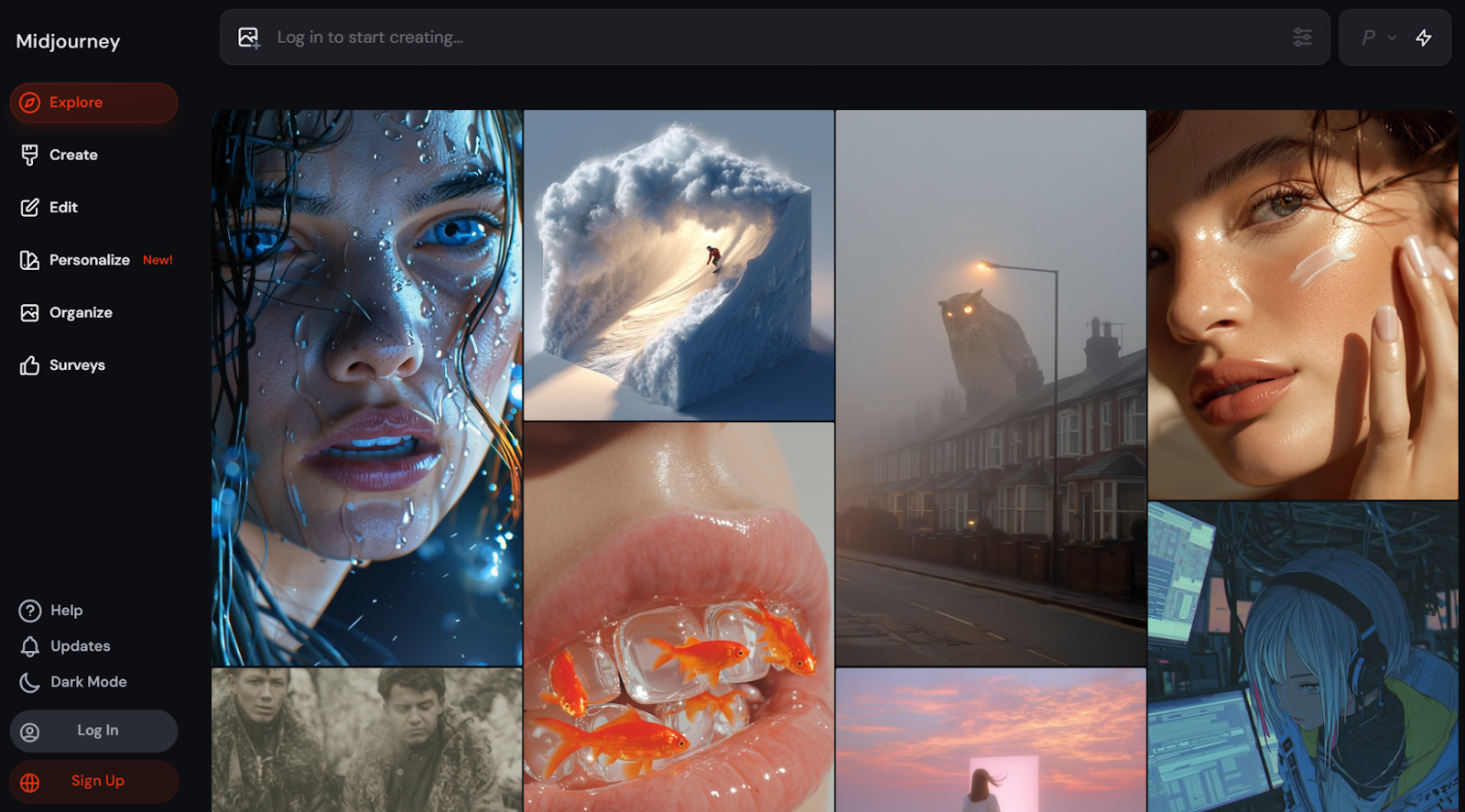
Generative AI refers to AI systems that can create original content based on patterns they’ve learned from existing data. These systems analyze and generate. That means they can write text, produce images, compose music, create videos, and even build 3D models from scratch.
You’ve probably seen generative AI tools like:
- DALL·E – turns text prompts into images
- Midjourney – known for stunning digital art
- Suno or Udio – generate songs with lyrics and melodies
- Runway – creates and edits videos based on text inputs
These generative AI models are trained on various forms of data, such as images, audio clips, video footage, and written text. The more diverse the input data, the more creative the AI can become.
Generative artificial intelligence now plays a real role in product design, marketing, customer experience, LLM security challenges and even education. But LLMs’ most popular task is usually to summarize text.
💡 Pro tip: You can use Tactiq to auto-summarize your meetings and extract key points in seconds, perfect for sharing quick updates with your team.
What Are Large Language Models (LLMs)?
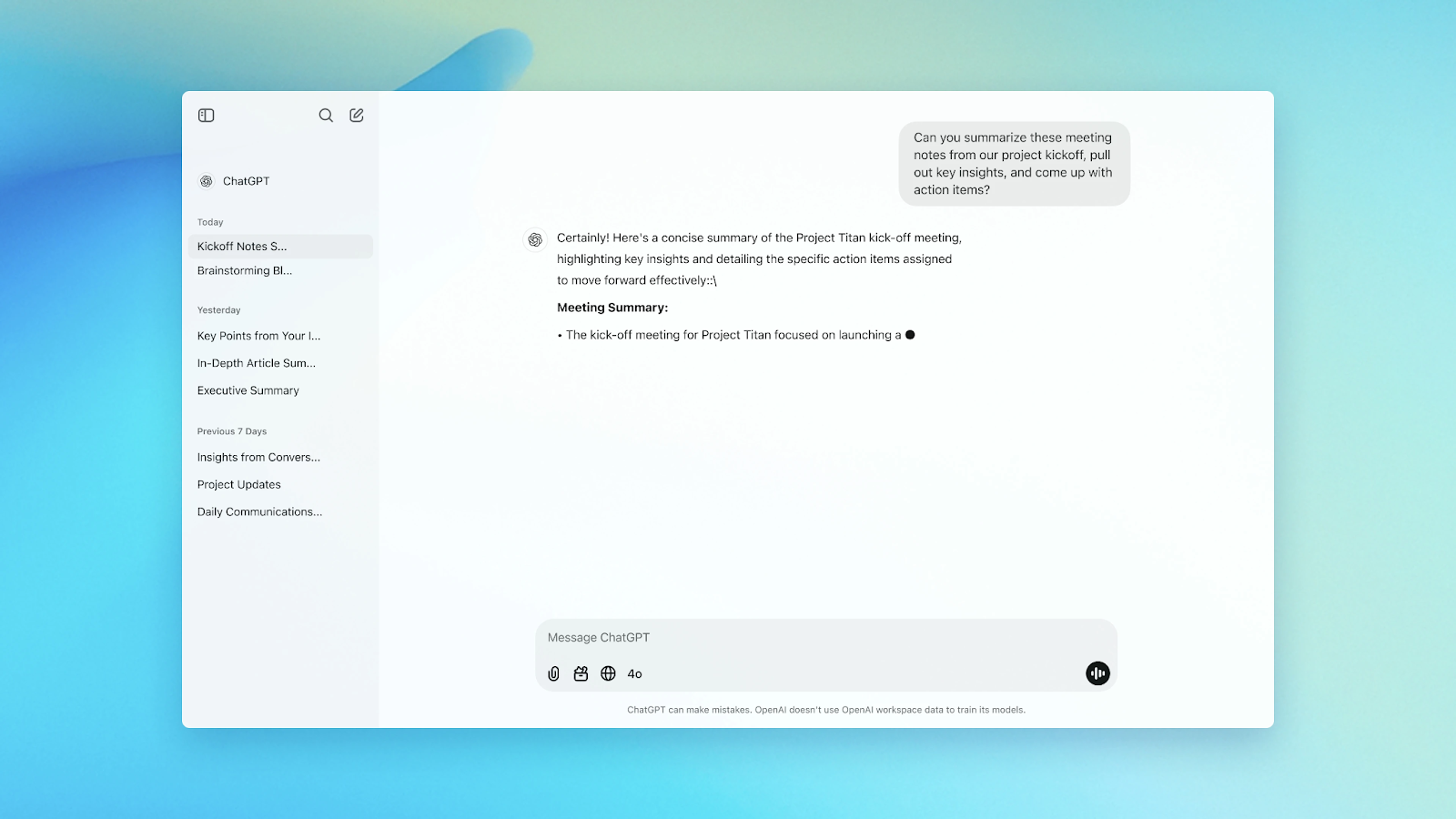
Image from OpenAI
Large language models (LLMs) are a specific type of generative AI designed to work with language. They’re trained on vast amounts of textual data. Think books, blogs, articles, scripts, even code. The goal? To generate human-like text that’s coherent, context-aware, and useful.
You’ve probably used or heard of popular LLMs like:
- GPT (Generative Pre-trained Transformer) by OpenAI
- BERT (Bidirectional Encoder Representations from Transformers) by Google
- Claude by Anthropic
- Gemini by Google DeepMind
- Meta’s LLaMA (Large Language Model Meta AI)
These models excel at language tasks like text summarization, translation, content creation, and code generation.
But here’s the key difference: all LLMs are generative AI, but not all generative AI are LLMs. For example, tools that generate images or music don’t use LLMs. They use different types of AI models built for those formats.
In short, if generative AI is the toolbox, LLMs are the language tools inside.
Key Differences Between Generative AI and LLMs
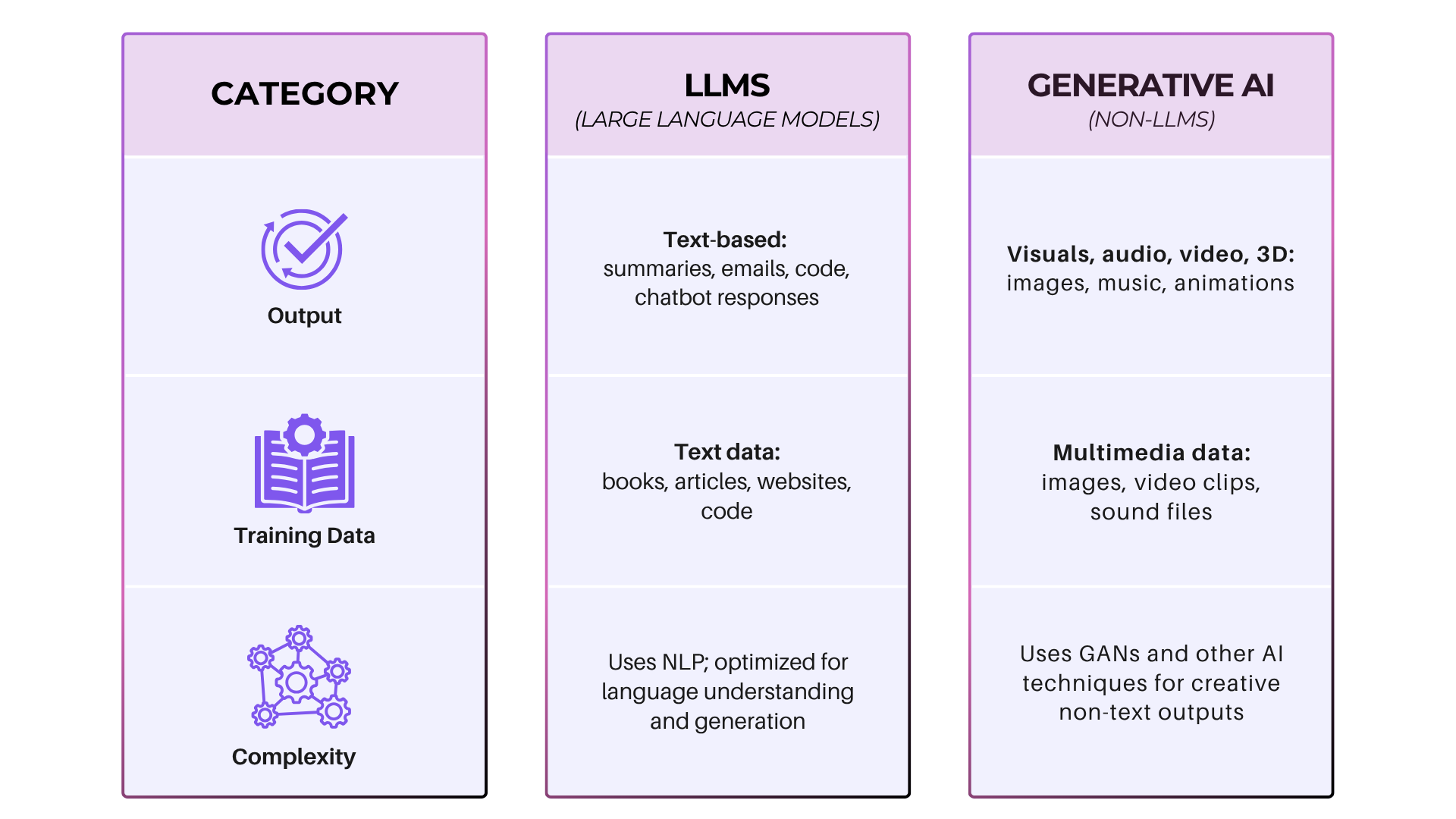
Here’s how LLMs and generative AI differ in output, training, and complexity.
Output
LLMs are designed for text. They generate things like summaries, emails, code snippets, or chatbot responses. For example, GPT and Claude can both write reports or answer questions in human-like text. Want to summarize meetings with ChatGPT? That’s a job for an LLM. Learn more about ChatGPT vs. Claude here.
On the other hand, generative AI tools like Midjourney or Suno produce images and music. Their outputs aren't words but visuals, sounds, or even animations. If you want to generate images or compose music, you're looking beyond LLMs.
Training data
LLMs are trained on extensive text data, including millions of documents, websites, and code repositories. This helps them understand grammar, sentence structure, and meaning. Tools like Gemini and Claude learn patterns in this textual data to generate contextually relevant text.
Generative AI systems that handle visuals or sound use very different training data. Think labeled image sets, video libraries, or music samples. These models analyze color, rhythm, or motion instead of language.
Complexity
Both LLMs and other generative AI models are complex, but they focus on different forms of artificial intelligence. LLMs rely heavily on natural language processing and are often used for customer support systems or coding assistants.
Meanwhile, generative adversarial networks (GANs) power many visual or audio generative AI models, and these often require more specialized architectures for image generation or 3D rendering.
Each model's complexity matches the input data and the form of output it needs to produce: text, images, or anything else.
When to Use LLM vs. Generative AI
Knowing the strengths of each model helps you pick the right tool for the job. Here’s a breakdown of when to use LLMs and when to go with other types of generative AI.
When to use LLMs
LLMs are best for language-related tasks. If your work involves text, chances are an LLM can help. Use them for:
- Text generation – write blog posts, summaries, or creative stories
- Language translation – translate across multiple languages
- Content summarization – shorten long documents into key takeaways
- Chatbot development – create smart assistants that understand tone and intent
- Code generation – tools like GitHub Copilot suggest code snippets as you type
LLMs and generative AI come together here. These LLMs are built to understand and produce coherent, high-quality text data quickly and at scale.
When to use generative AI
Other generative AI tools shine when you’re working with non-text formats. Try them for:
- Image generation – turn ideas into visuals with tools like DALL·E or Midjourney
- Music composition – create original tracks with Suno or Udio
- Video creation – make short clips or edits with AI video tools
- 3D model generation – helpful for games, AR/VR, or product design
This is where the generative AI vs LLM comparison really shows. LLMs don’t handle images or sound. You’ll need other AI models trained specifically for those formats.
How Tactiq Harnesses LLMs for Productivity

Now that you know when to use LLMs vs other generative AI tools, let’s look at how one platform puts LLMs to work in real-world workflows.
Tactiq uses OpenAI's large language models to turn your Zoom and Google Meet calls into actionable insights automatically.
Here’s what Tactiq can do with LLMs:
- Generate action items automatically from what was discussed
- Summarize key insights with one click using custom prompts
- Create AI workflows that turn transcripts into follow-up emails, project docs, or Jira tickets
Want to extract decisions from your last sales call? Tactiq can do that. Need to send a quick recap to your team? Done in seconds. These LLM-powered features aren’t just smart. They’re practical. They keep your team aligned and your work moving forward.
Download the free Tactiq Chrome Extension today and see how fast your team can move when meetings work for you.
{{rt_cta_ai-convenience}}
Wrapping Up
LLMs and generative AI share a common goal: content creation with the help of machine learning. But while generative AI encompasses tools that produce images, music, and video, LLMs focus on one powerful format: language.
Understanding the key differences, from output to training data, can help you choose the right tool for the job. Each type of AI plays a unique role in building a chatbot, generating human-like text, or exploring creative formats like art or audio.
And if your work involves communication, collaboration, or documentation, LLM-powered tools like Tactiq can save time, cut down on manual tasks, and keep your team in sync.
No. All LLMs are a type of generative AI, but generative AI also includes models for images, music, and video, not just language.
General AI aims to mimic full human intelligence across tasks. LLMs are specialized tools trained for language-related tasks like writing or summarizing.
GPT is a specific kind of large language model. So while all GPT models are LLMs, not all LLMs are GPT.
SLMs (Small Language Models) are lightweight alternatives to LLMs. Both are types of language models, but SLMs are designed for faster, more focused use cases.
ChatGPT is an LLM. It’s part of the GPT family and trained to generate human-like text based on prompts.
Related articles








Want the convenience of AI summaries?
Try Tactiq for your upcoming meeting.
Want the convenience of AI summaries?
Try Tactiq for your upcoming meeting.
Want the convenience of AI summaries?
Try Tactiq for your upcoming meeting.