
3 Ways to Download Zoom Recordings
September 27, 2023
September 27, 2023
April 15, 2026
April 15, 2026

TL;DR: This guide explains how to find, download, and share Zoom recordings step-by-step. But watching full meetings is time-consuming. If you just need the highlights, Tactiq automatically generates transcripts and AI summaries from your Zoom calls, so you never have to rewatch to find what matters.
Zoom recordings hold a lot of value. From key decisions to client conversations, they capture what matters most in your Zoom meetings. But knowing how to actually get your hands on those files isn't always obvious.
Each downloading method works a little differently. And if all you need is the audio or a transcript, there are faster options too.
In this guide, you'll learn:
- How to download Zoom cloud recordings from the web portal
- How to find and access local recordings on Windows and Mac
- How to download a recording from a shared link
- How to download an audio-only file in M4A format
Method 1: Download Zoom Cloud Recording
Cloud recordings are recorded Zoom meetings saved directly to your Zoom account's cloud storage. They're tied to your account, so you can access, download, and share your recording files from any device.
Cloud recording is available on all paid Zoom plans. By default, Zoom stores cloud recordings for 30 days before they are automatically deleted. Admins can adjust this auto-delete window in account settings, so check with your team if you're unsure how long your recordings are stored.
Step-by-step: Downloading your own cloud recording
- Sign in to the Zoom web portal at zoom.us.
- In the left navigation menu, click Recording & Transcripts.
- In the Cloud Recordings tab, you'll see a list of your processed recordings.
- Use the search bar to find a recording by meeting ID, topic, or transcript keywords. Click Advanced Search to filter by date range, host, or other parameters.
- Click the recording you want to download.
- Click the Download button to save the recording files to your device.

💡 Pro tip: Want to skip the recording setup entirely? Tactiq captures real-time transcripts and AI summaries directly inside your Zoom meeting. No cloud storage or post-meeting processing required. Try it free.
Accessing recordings via Zoom Hub
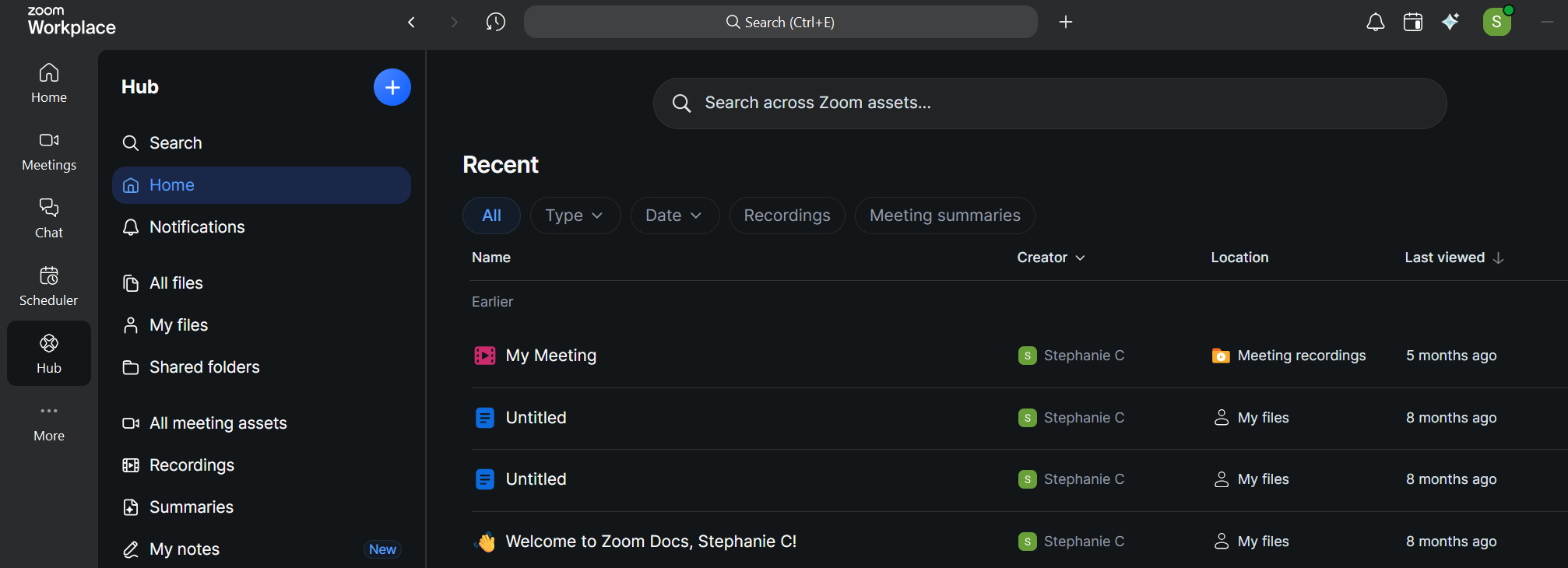
Zoom introduced the Hub tab in the desktop app (version 6.5.5 and newer) as a central place to access recordings, Zoom Docs, and meeting insights. You can find it in the left navigation bar of the Zoom desktop client.
That said, the Zoom web portal remains the most reliable method for downloading and managing your recording files. Hub is useful for quick access, but the web portal gives you more control over file types, sharing settings, and download options.
What files can you download?
When you download a cloud recording, Zoom may provide several file types depending on your account settings:
- MP4 - the primary Zoom video file, typically showing shared screen with speaker view
- M4A - an audio-only version of the recording
- TXT - a chat log containing public in-meeting messages, if chat was enabled
- VTT - a timestamped audio transcript file, if transcription was enabled
The exact files available depend on what your host recorded and which settings were active during the Zoom meeting.
Method 2: Download a Zoom Recording (Local)
Local recordings are saved directly to your computer during the Zoom meeting. They don't require a paid Zoom account, but they do come with some limitations. The recording only exists on the device that captured it, and you can't access it from another computer unless you manually transfer the file.
Where to find your local recording
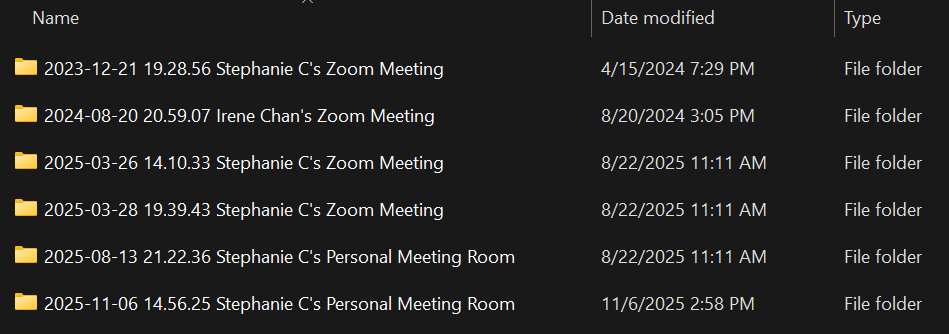
By default, Zoom saves local recordings to the Documents > Zoom folder on your computer. The exact path depends on your operating system:
- Windows: C:\Users\[Your Name]\Documents\Zoom
- Mac: /Users/[Your Name]/Documents/Zoom
Each recorded meeting gets its own subfolder, named by date, time, and meeting title.
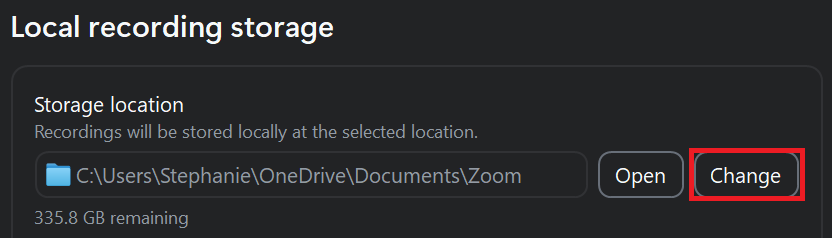
To change the default save location, go to Settings > Recording in the Zoom desktop app. Under Local Recording Storage, click Change to select a new folder.
Participant recording permissions
By default, only the host can record a Zoom meeting locally. Participants need explicit permission from the host to record.
Here's how recording permissions work depending on your role:
- Host: Your local recording saves automatically to your device when the meeting ends.
- Participant with permission: If the host grants you recording rights during the meeting, your recording gets saved to your own device.
- Co-host: Co-hosts can start cloud or local recordings with the same privileges as the host. If a co-host records to the cloud, Zoom sends the recording link to the original host's account, not the co-host's.
- Participant without permission: You won't have access to a local recording. Ask the host to share the cloud recording or transcript after the meeting.
Method 3: Download a Zoom Recording from a Shared Link
If someone shares a Zoom recording with you, downloading it is straightforward as long as the host has enabled downloads.
How it works
- Click the shared link to open the Zoom cloud recording page.
- Enter the passcode if prompted. Ask the sharer if you don't have it.
- Once on the recording page, click the Download button. Zoom offers download options for both the video and audio versions.
Note: If the download button is greyed out, the host has restricted downloads in their sharing settings. You'll need to ask them to enable it or share the file another way.
How to download a recording as a participant
You can only download a shared Zoom recording if the host has turned on the download option. Hosts control this through their cloud recording sharing settings in the Zoom web portal.
If you can't download the recording, here are a few options:
- Ask the host to enable downloads in their sharing settings
- Request that they export and send the video file directly
- Ask them to share a Zoom transcript instead; often all you need is the text, not the full video
How to Download an Audio-Only Zoom Recording
Sometimes you don't need the full video file. If you only want the audio track from a recorded Zoom meeting, you can download it separately in M4A format directly from the Zoom web portal.
- Sign in to the Zoom web portal at zoom.us.
- In the left navigation menu, click Recording & Transcripts.
- In the Cloud Recordings tab, find the recording you need. Use Advanced Search to filter by date range, host, topic, or meeting ID if needed.
- Click on the recording to open it.
- Hover over the Audio Only file in the list of recording files.
- Click the download icon that appears to save the M4A file to your device.

Note: The Audio Only file only appears if your account settings had audio recording enabled at the time of the Zoom meeting. If you don't see it, check your cloud recording settings in the Zoom web portal under Settings > Recording.
If what you need from the recording is the conversation, not the video file, Tactiq gets you there without the extra steps.
A Faster Alternative: Get Zoom Transcripts with Tactiq
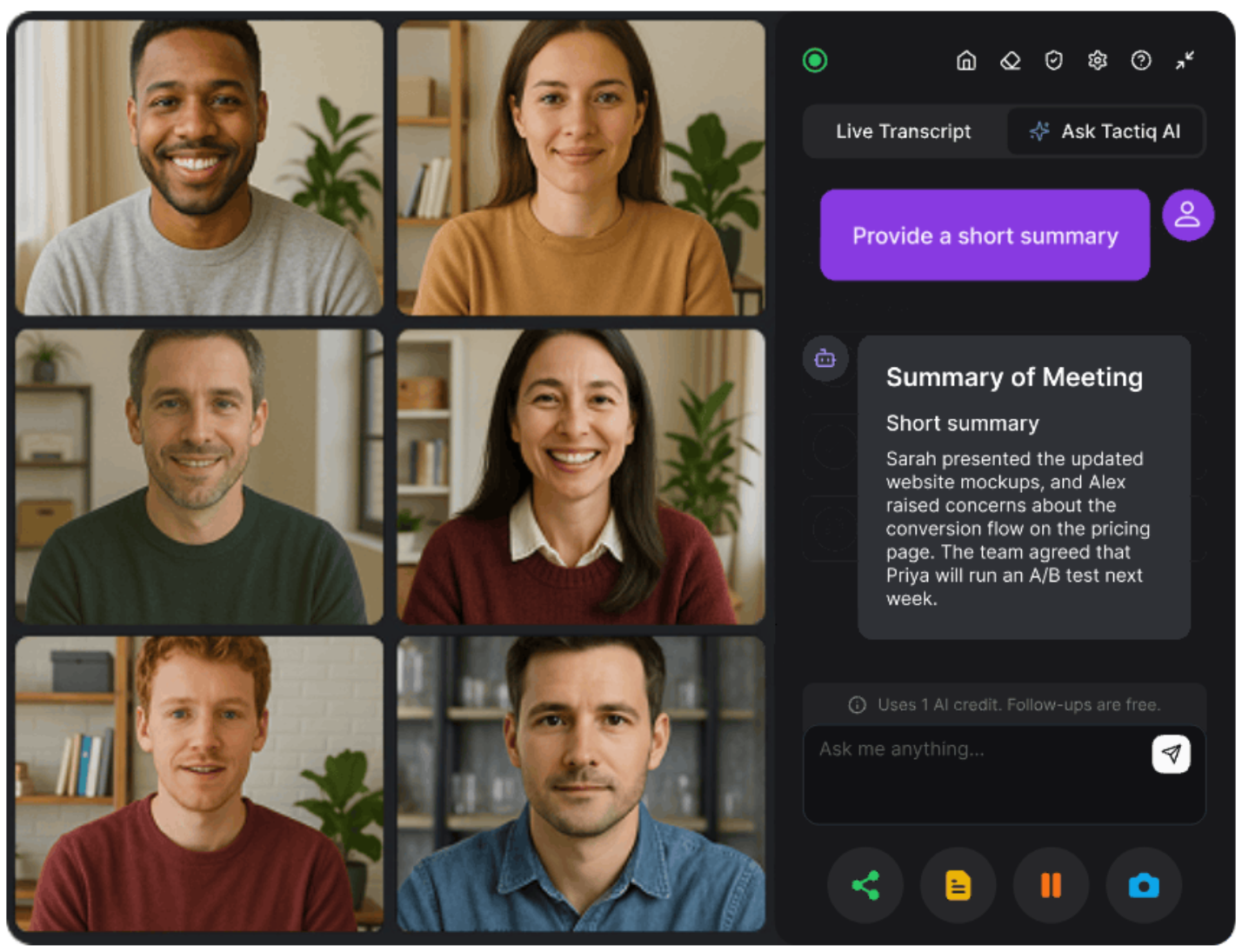
Downloading a Zoom recording gives you a video file, but most of the time, what you actually need is the key information from the meeting. Tactiq gives you exactly that.
Tactiq is a free Chrome extension that transcribes your Zoom meetings in real time and turns those transcripts into AI summaries, action items, and automated workflows. No recording required.
{{rt_cta_ai-convenience}}
Why use Tactiq instead of Zoom's built-in recording?
- Everyone gets notes, not just the host. Any participant can run Tactiq. No recording permissions or paid Zoom account needed.
- Your summary is ready when the call ends. Tactiq transcribes live and delivers AI summaries and action items the moment you hang up.
- No video file to manage. Transcripts save automatically to Google Drive. Your workflows run. You move on.
- Works in 60+ languages. Tactiq automatically detects the language of your meeting. No setup needed.
- Share workflows with your team. Build a reusable automation once and share it in one click. Everyone runs the same process without having to set it up individually.
Learn how: AI note-taking works with Zoom meetings.
Watch: How to use Tactiq with Zoom
How to set up Tactiq for Zoom
- Install the Tactiq extension from the Chrome Web Store.
- Sign in with your Google account.
- In your Tactiq dashboard, go to Account & Settings > Integrations and click Connect next to Zoom.
- Join your Zoom meeting in Chrome. The Tactiq widget will appear on the right side of your screen and begin transcribing automatically.
Note: Tactiq works with Zoom in the Chrome browser. The Zoom desktop app for macOS is currently in beta. Use the Chrome browser version for the fully supported experience.
Wrapping Up
Zoom offers three main ways to download recordings, depending on your situation. Use the Zoom web portal for cloud recordings, check your local Documents folder for recordings saved to your device, and click the shared link to download a recording someone else has sent you. If you only need the audio, you can grab the M4A file directly from the cloud recordings page.
That said, if what you really need is the meeting content rather than the file, Tactiq gets you there faster.
Add Tactiq to Chrome for free and get more out of every Zoom meeting.
Looking for third-party options? Check out our Zoom video downloader guide.
Yes. Zoom cloud recordings are available to download in MP4 format. Go to Recording & Transcripts in the Zoom web portal, open the recording, and click the download icon next to the video file.
You can't duplicate a recording within Zoom. Download the video file and make copies in your local storage or a cloud drive like Google Drive or Dropbox.
Yes. You can download the recording from the Zoom web portal and upload it manually to Google Drive. Tactiq also automatically saves meeting transcripts to Google Drive. No manual steps needed.
By default, Zoom stores cloud recordings for 30 days before they are automatically deleted. Admins can adjust this window in account settings. Download any recordings you need before the auto-delete deadline.
Sign in to the Zoom web portal and go to Settings > Recording. From there, you can choose between local and cloud recording, select which elements to capture, and manage auto-delete preferences. Settings may vary depending on your Zoom account type.
Related articles
_Main.jpg)







Want the convenience of AI summaries?
Try Tactiq for your upcoming meeting.
Want the convenience of AI summaries?
Try Tactiq for your upcoming meeting.
Want the convenience of AI summaries?
Try Tactiq for your upcoming meeting.