
Top Microsoft Teams Alternatives for Remote Teams
August 28, 2024
August 28, 2024
August 12, 2026
August 12, 2026

Microsoft Teams gets the job done, but it's not the best fit for every team. Some organizations want simpler pricing, better third-party integrations, or fewer complicated settings to manage. Others just want a platform that's easier to onboard new hires into.
TL;DR: What Are the Top Microsoft Teams Alternatives?
If you're looking for the single best Microsoft Teams alternative, Slack stands out for its flexibility, strong integrations, and ease of use across team sizes.
Whatever platform you choose, pairing it with Tactiq gives you real-time transcription and AI-generated notes, so nothing important gets lost after the meeting ends.
Why Consider Microsoft Teams Alternatives?
Microsoft Teams works well for many organizations, but it comes with tradeoffs. Here are the most common reasons teams look elsewhere.
Cost
Teams isn't sold as a standalone product for most businesses. You typically need a Microsoft 365 Business plan to get full functionality. Plans start at $7 per user per month and climb to $22 for higher tiers. Add-ons like Teams Phone and Copilot cost extra on top of that.
Complexity
Teams packs in a lot of tools, from chat to file storage to video conferencing. New users can find the interface overwhelming at first. Navigating channels, tabs, and settings takes practice to master. Onboarding often takes longer than it would with simpler platforms.
Limited integration outside Microsoft
Teams connects smoothly with other Microsoft 365 apps. But third-party integrations aren’t as smooth by comparison. Teams that rely on Google Workspace may run into compatibility gaps. This can slow down workflows for teams outside the Microsoft ecosystem.
Specialized needs
Some industries need features Teams doesn't offer out of the box. Regulated industries often require compliance tools beyond what standard plans include. Others want workflow automation built around a unique internal process. Teams with highly specialized needs may find Teams too generic.
7 Microsoft Teams Alternatives for Remote and Hybrid Teams
Each of these platforms takes a different approach to team collaboration and video conferencing. Here is how they compare.
1. Slack
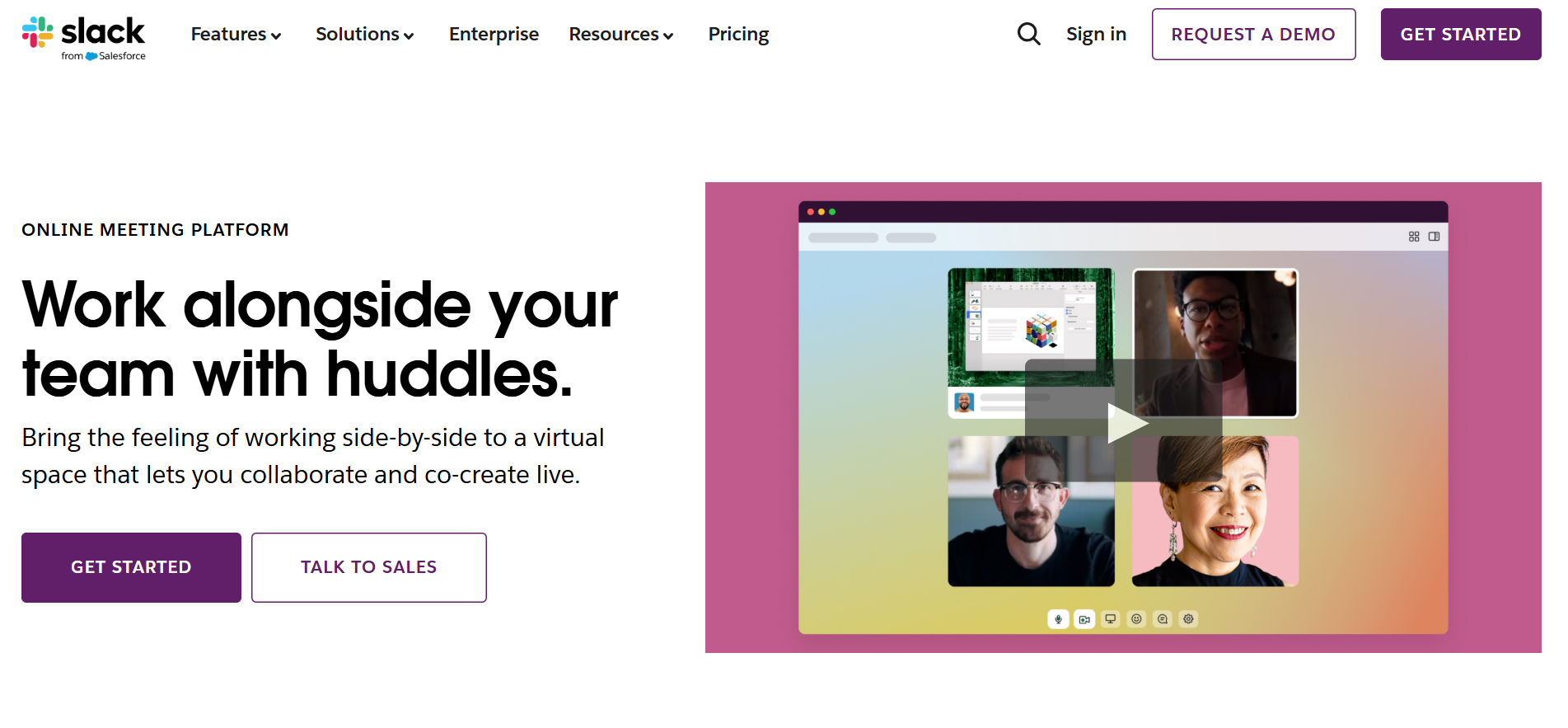
Slack remains one of the most popular team communication tools on the market. It focuses on chat-based collaboration with deep third-party integrations. Teams that rely on multiple tools often find Slack easier to connect than Teams.
What you'll like:
- Unlimited message history and app integrations on paid plans
- Group huddles with screen sharing for up to 50 participants
- Strong AI features, including channel summaries and thread recaps
- Integrations with apps like Google Drive, Trello, and Asana
What you won't like:
- The free plan limits message history to 90 days
- Advanced compliance tools require the Business+ tier
Supported OS: Web, Windows, macOS, iOS, Android
Price: Free plan available. Paid plans start around $7.25 per user per month.
2. Zoom
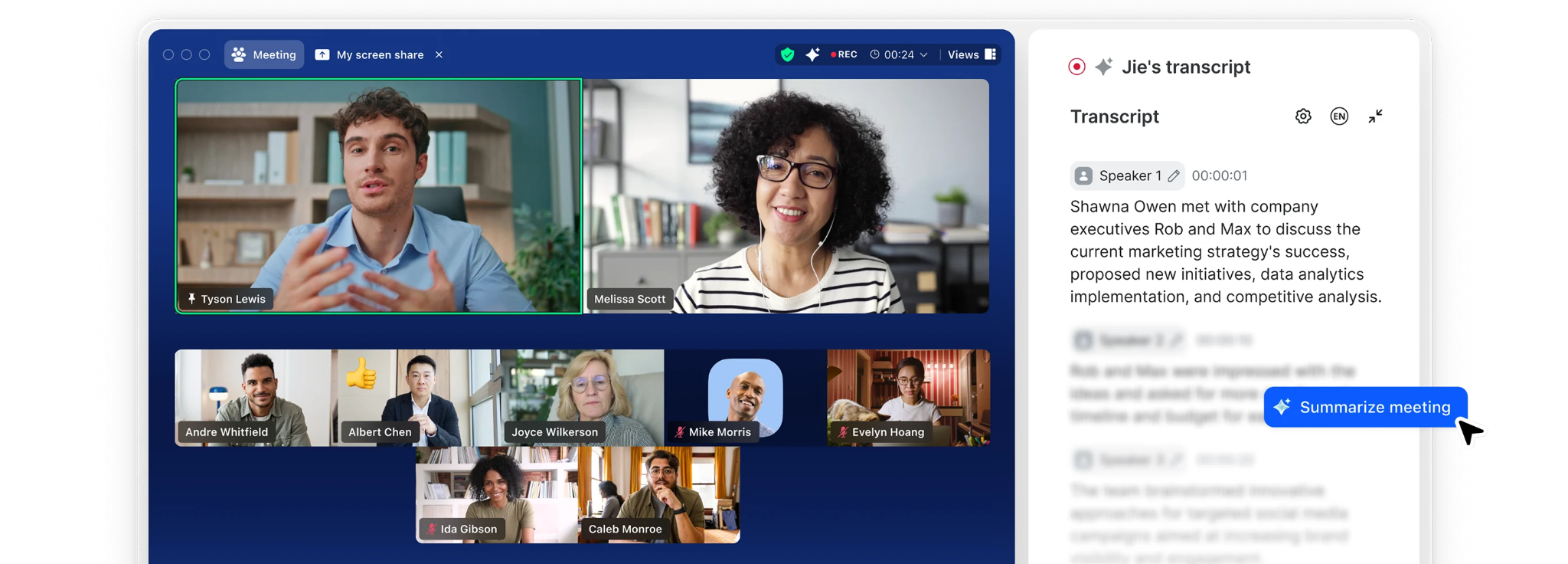
Zoom has expanded well beyond video meetings. It now bundles meetings, team chat, whiteboarding, and phone service under one platform called Zoom Workplace. This makes it a strong pick for teams that want video and messaging in one place.
What you'll like:
- AI Companion includes real-time transcription and meeting summaries
- Unlimited whiteboards on Business plans
- Reliable video quality, even with larger participant counts
- Integrations with apps like Salesforce, Slack, and Google Calendar
What you won't like:
- The free plan caps group meetings at 40 minutes
- Add-ons like Zoom Phone increase the total cost quickly
Supported OS: Web, Windows, macOS, iOS, Android, Linux
Price: Free plan available. Paid plans start around $16.99 per user per month and go up to $21.99 for higher tiers.
If you're weighing Zoom directly against Teams for meeting limits, our guide on Microsoft Teams meeting limits breaks down the numbers.
💡 Pro tip: Whichever platform you land on, Tactiq gives you real-time transcription and AI notes for Zoom, Google Meet, or Teams, free to get started.
3. Google Meet
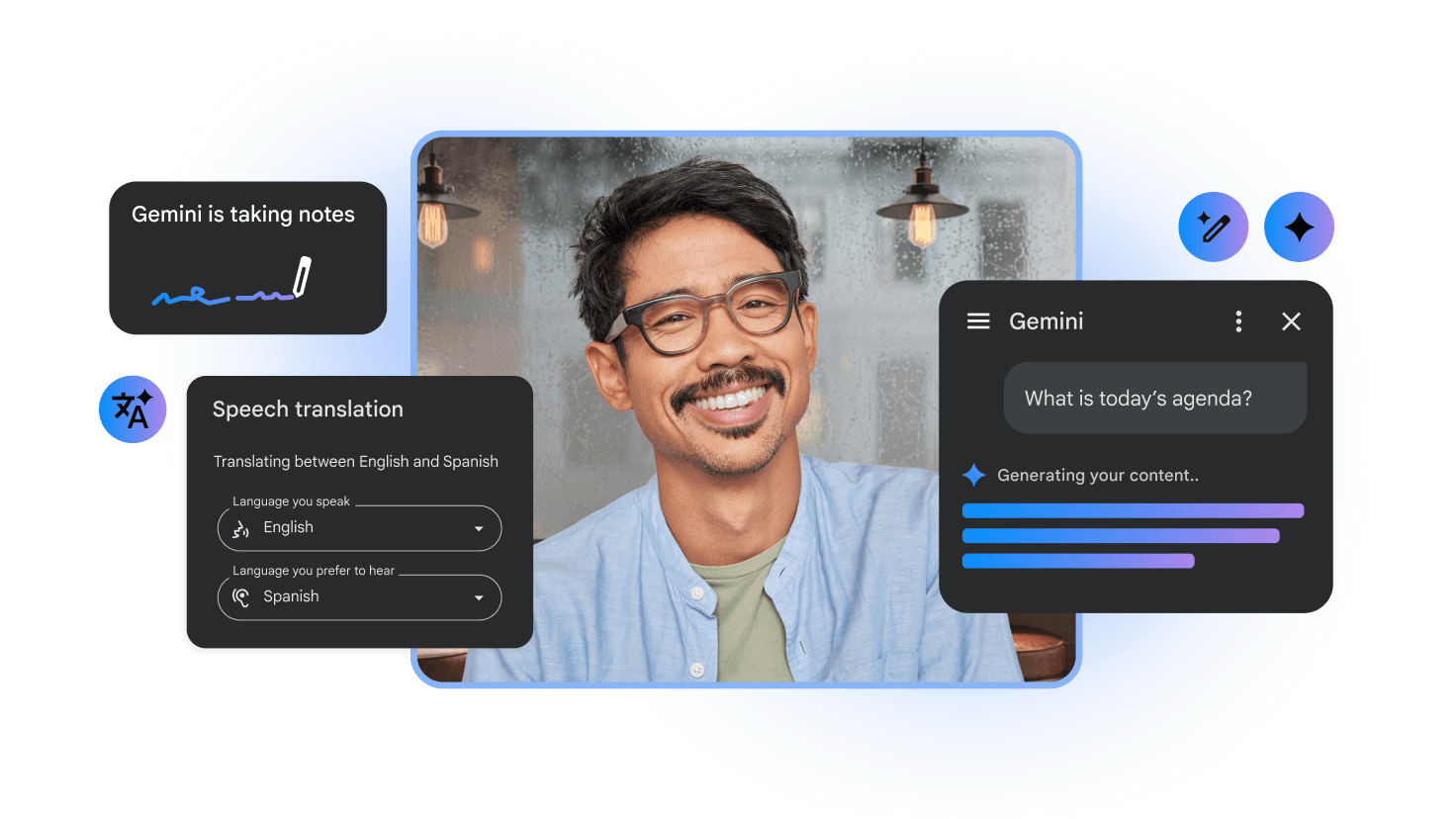
Google Meet is the natural pick for teams already using Google Workspace. It integrates tightly with Gmail, Calendar, and Drive. Setup takes minutes if your team already lives inside Google's ecosystem.
What you'll like:
- Free plan supports up to 100 participants and 60-minute group meetings
- Gemini AI is now bundled into paid Workspace plans
- Simple, no-friction scheduling through Google Calendar
- Google Workspace Marketplace add-ons for tools like Trello, Asana, and Slack
What you won't like:
- Recording requires a paid Workspace plan
- Fewer advanced meeting features compared to Zoom or Webex
Supported OS: Web, Windows, macOS, iOS, Android
Price: Free plan available. Paid Workspace plans start around $6.30 per user per month.
Teams considering AI note-taking alongside Google Meet can check our guide on using AI note-taking with Google Meet.
4. Webex
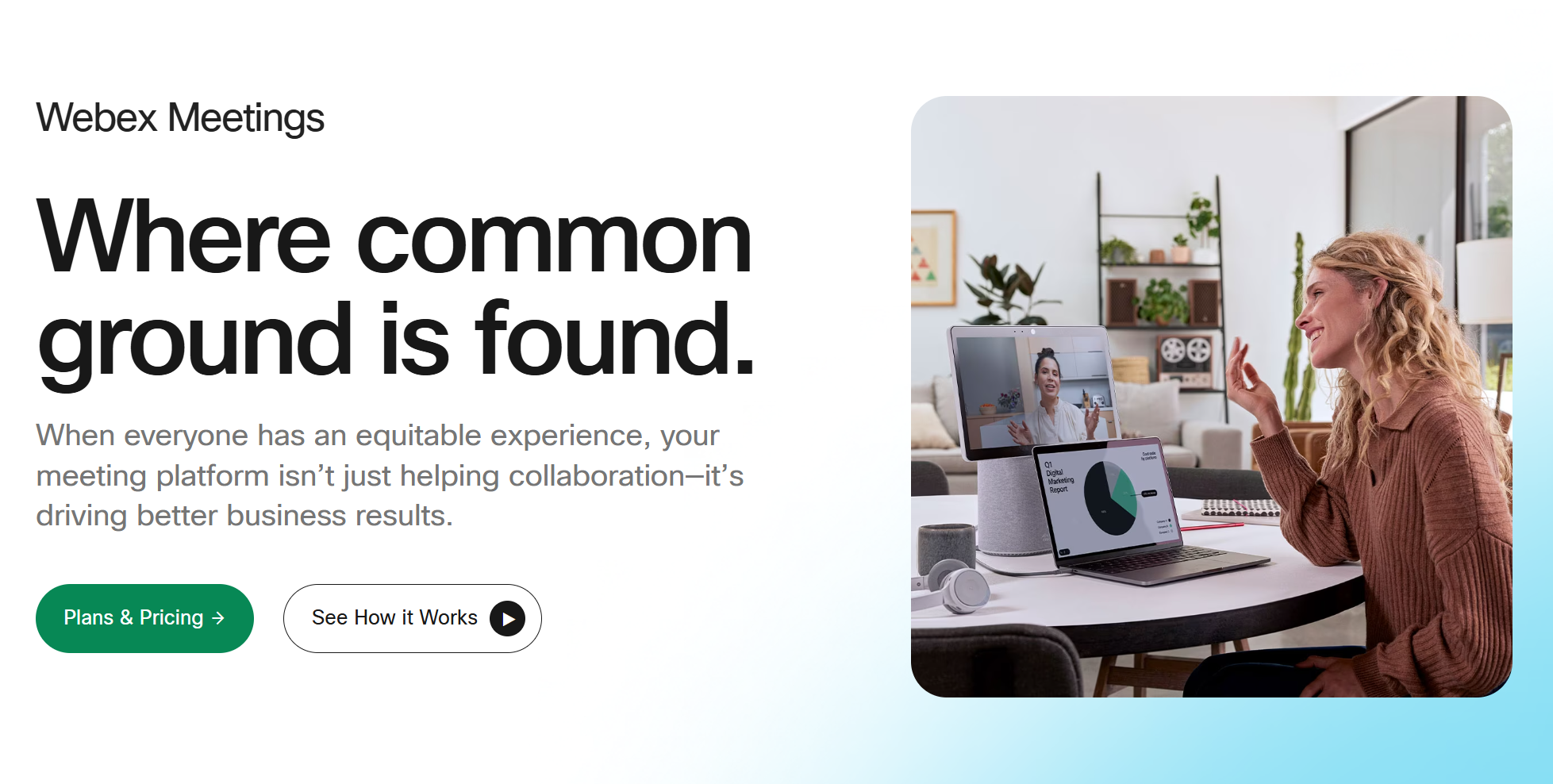
Webex, built by Cisco, targets larger organizations and regulated industries. It offers strong security credentials and enterprise-grade support. Teams with strict compliance needs often lean toward Webex over lighter competitors.
What you'll like:
- Free plan supports up to 100 participants
- Strong compliance and security certifications for regulated industries
- AI-powered meeting summaries included on paid plans
- Integrations with apps like Microsoft 365, Salesforce, and Slack
What you won't like:
- Higher-tier plans get expensive for larger teams
- Interface can feel more complex than lighter competitors
Supported OS: Web, Windows, macOS, iOS, Android
Price: Free plan available. Paid plans start around $12 per user per month.
5. Rocket.Chat
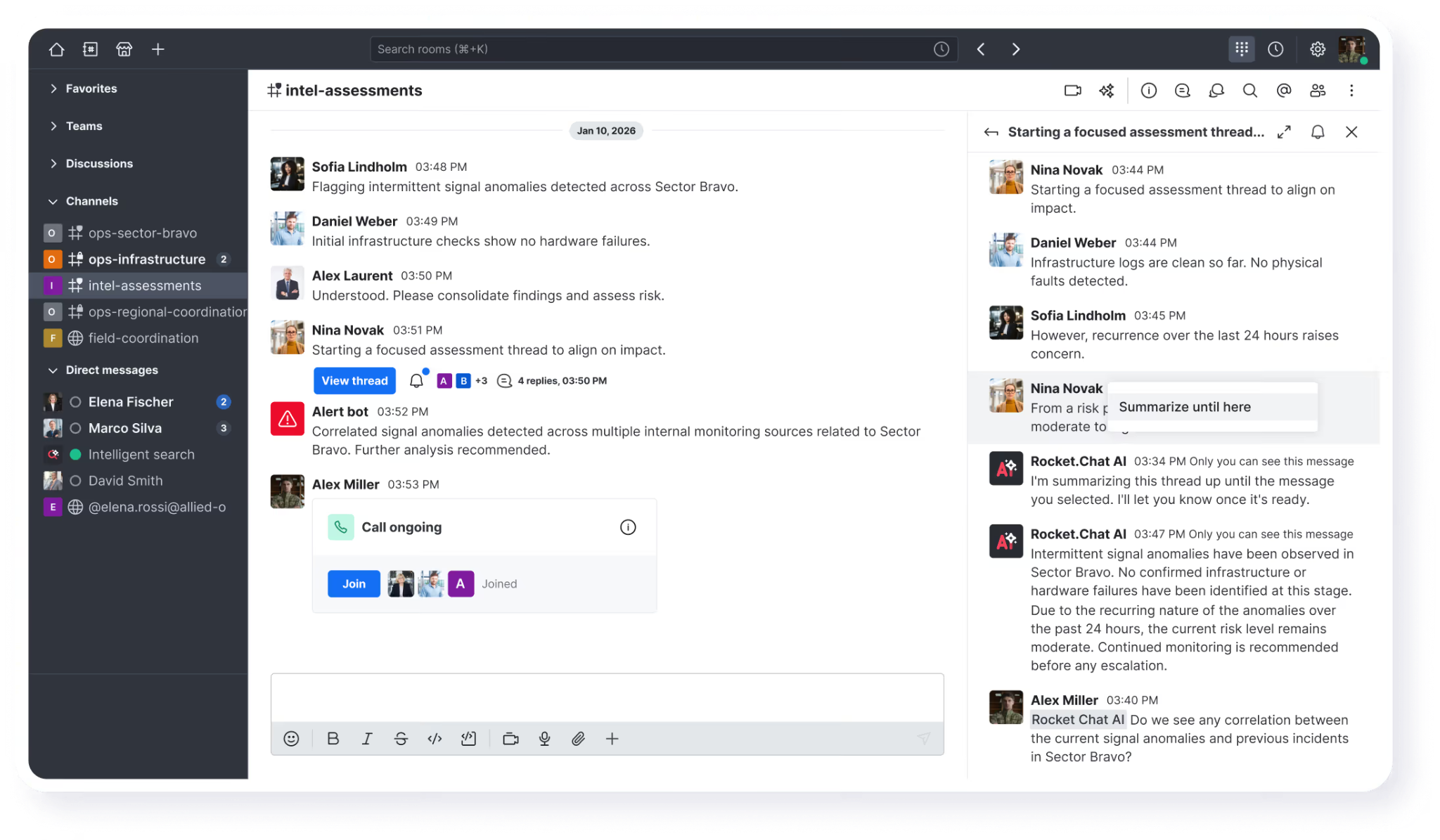
Rocket.Chat stands out for organizations that need full control over their data. It supports self-hosted deployment, so your conversations never touch a third-party server. This makes it a common pick for regulated industries and government agencies.
What you'll like:
- Self-hosted option keeps data entirely within your own infrastructure
- Strong security credentials, including end-to-end encryption
- Free Starter plan supports up to 50 users for small teams
- Integrations with apps like Google Drive, Jira, and GitHub
What you won't like:
- Paid plans now require contacting sales for custom pricing
- Self-hosting requires more technical setup than cloud-based tools
Supported OS: Web, Windows, macOS, iOS, Android, Linux
Price: Free plan available for up to 50 users. Paid plans are custom-quoted.
6. Pumble
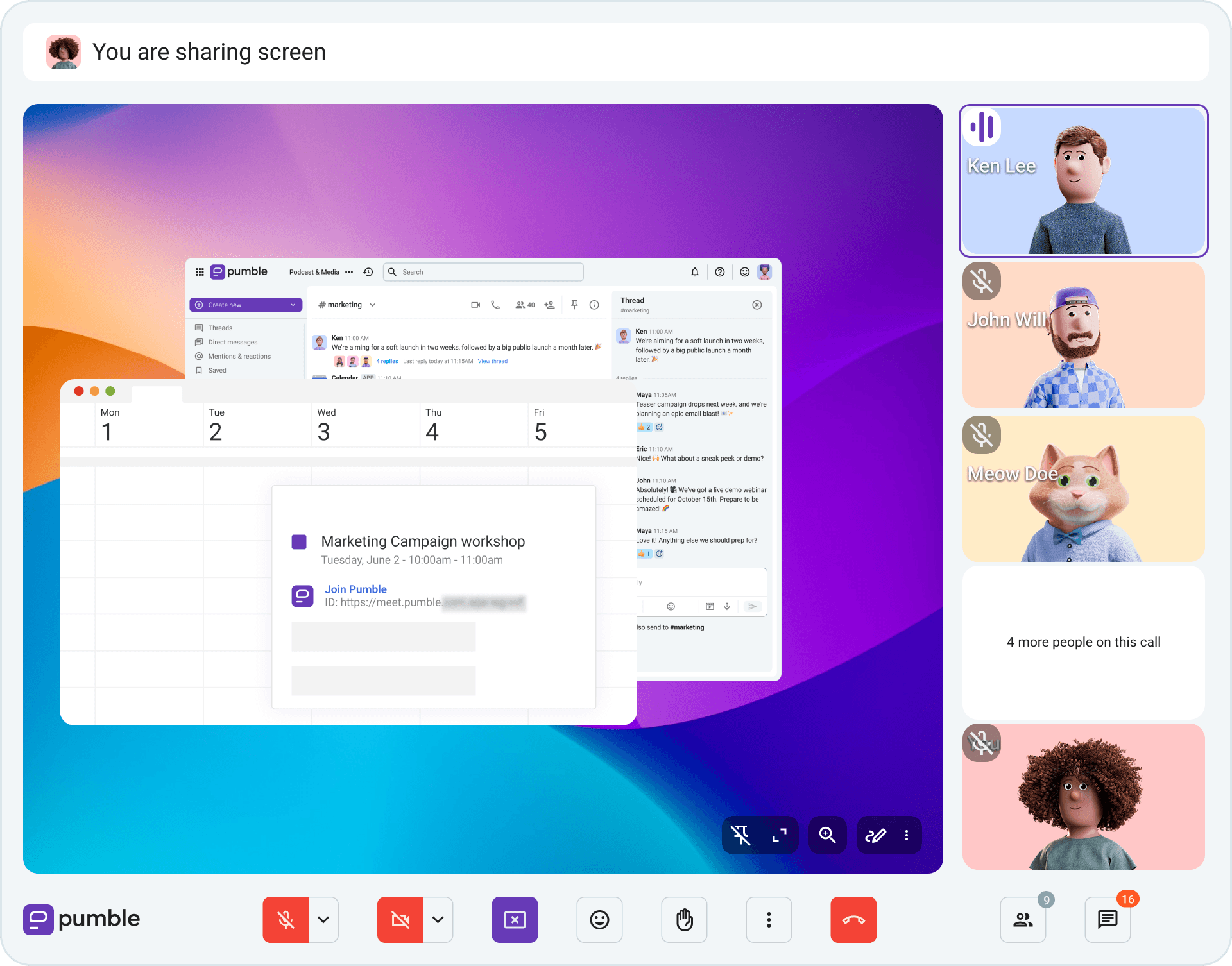
Pumble offers a generous free plan built for small teams and startups. It keeps unlimited message history and unlimited users at no cost, unlike many competitors. This makes it a solid budget-friendly Teams alternative for growing businesses.
What you'll like:
- Free plan includes unlimited users and unlimited message history
- Paid plans stay affordable even as your team grows
- Simple interface with a shorter learning curve than Teams
- Integrations with apps like Google Drive, Zoom, and Zendesk
What you won't like:
- No breakout rooms or virtual backgrounds, unlike Zoom or Google Meet
- Screen sharing requires a paid Pro plan or higher
Supported OS: Web, Windows, macOS, iOS, Android
Price: Free plan available. Paid plans start around $2.49 per user per month.
7. Chanty

Chanty is a lightweight option built for small teams that want simple, no-frills communication. It keeps unlimited searchable message history on every plan, even the free tier. This makes it a solid choice for startups that don't want to lose past conversations.
What you'll like:
- Unlimited message history on both free and paid plans
- Built-in task management lets you turn messages into assignable to-dos
- Simple, decluttered interface with a short learning curve
- Integrations with apps like Google Drive, Trello, and Zapier
What you won't like:
- Free plan caps out at 5 team members
- Screen sharing requires the Business plan
Supported OS: Web, Windows, macOS, iOS, Android
Price: Free plan available for up to 5 members. Paid plans start around $3 per user per month.
How to Take Productive Notes With Microsoft Teams Meetings
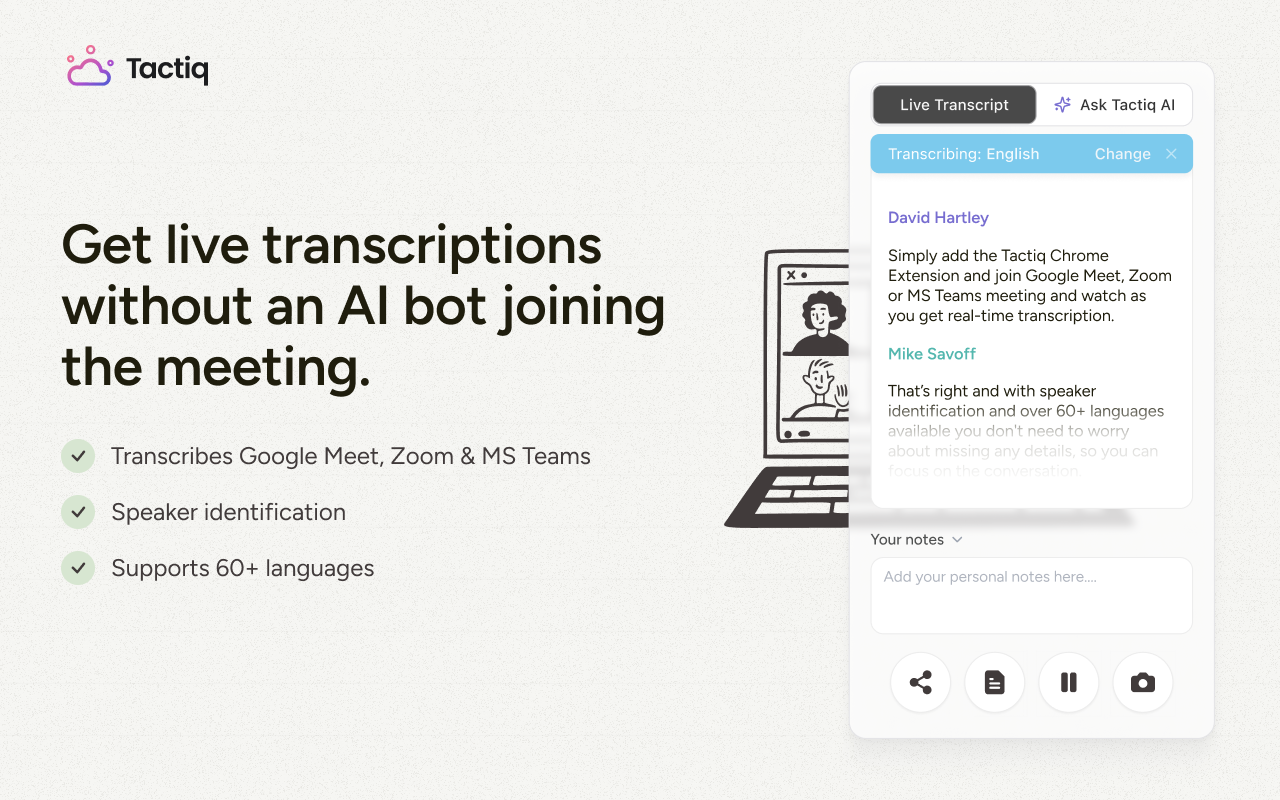
Taking notes during a live meeting pulls your focus away from the conversation. Tactiq solves this by transcribing your Microsoft Teams meetings in real time, without a bot joining the call and without needing a recording. This means you can stay present in the discussion and review the details later.
Real-time transcription
Tactiq captures every word spoken during your Teams meeting as it happens. It works entirely through a free Chrome extension, so there's nothing to install inside Teams itself. Speaker labels and timestamps make transcripts easy to scan after the meeting ends.
AI-generated summaries
Once your meeting wraps up, Tactiq turns the full transcript into a clear summary. Key decisions, discussion points, and action items get pulled out automatically. This saves you from scrolling through a long transcript to find what matters.
Accessing your notes with the Tactiq MCP server
For teams using Claude or ChatGPT, Tactiq's MCP server lets you pull past meeting notes directly into your AI assistant. You can search and reference previous Teams meetings without leaving your workflow. This feature is available on Tactiq's Business plan and up.
Download the free Tactiq Chrome extension to get started.
{{rt_cta_ai-convenience}}
Choosing the Right Microsoft Teams Alternative
Deciding to replace Microsoft Teams comes down to what your team needs daily. Some want a simpler collaboration platform built around team chat. Others need stronger project management and task management baked in.
Test a free plan before committing. Check how each option handles file sharing, screen sharing, and group meetings. The right collaboration tools should help you track progress, not add friction.
Whatever platform you choose, pairing it with Tactiq keeps your meeting notes organized. Real-time transcription and AI summaries let you stay present in the conversation and catch up on details later.
Teams can be costly, complex, or hard to integrate outside Microsoft's ecosystem. Exploring alternatives helps you find a platform that fits your workflow and budget better.
Leading options include Slack for integrations, Zoom for video conferencing, and Google Meet for Google Workspace users. Each offers different strengths depending on your team's needs.
Tactiq provides real-time transcription and AI-generated summaries, so you capture every detail without manual effort. You can even pull past notes into Claude using Tactiq's MCP server.
Teams outside Microsoft's ecosystem may face integration gaps, a steeper learning curve, and higher costs. These issues can slow onboarding and disrupt existing workflows.
Tactiq's AI summaries and custom prompts help you create follow-up tasks, like emails or Jira tickets, right after your meeting. This saves time and keeps nothing important from slipping through.
Related articles





Want the convenience of AI summaries?
Try Tactiq for your upcoming meeting.
Want the convenience of AI summaries?
Try Tactiq for your upcoming meeting.
Want the convenience of AI summaries?
Try Tactiq for your upcoming meeting.