
Zoom vs Microsoft Teams: Pros and Cons for Businesses
- Published:
- August 14, 2024
- Updated:
- September 24, 2026

When comparing Zoom vs. Microsoft Teams, the answer depends on how your team works.
Zoom suits external meetings, large events, and teams prioritizing video and audio quality. Microsoft Teams works better for internal collaboration, especially for organizations using Microsoft 365.
This guide compares:
- Pricing, video quality, and collaboration features
- Third-party integrations and AI features
- The best platform for different business needs
TL;DR: Which Is Better: Zoom vs. Microsoft Teams?
Microsoft Teams is better for lower pricing, Microsoft 365 integration, and internal collaboration. Zoom is better for video quality, external meetings, and hosting large meetings. Tactiq (opens in a new tab) works with both platforms to provide live transcription, meeting summaries, and searchable transcripts.
Comparison of Pricing Structures and Plans
Microsoft Teams bundles video conferencing with Microsoft 365 tools. Zoom Workplace focuses more on video meetings, external guests, and large events.
Microsoft Teams
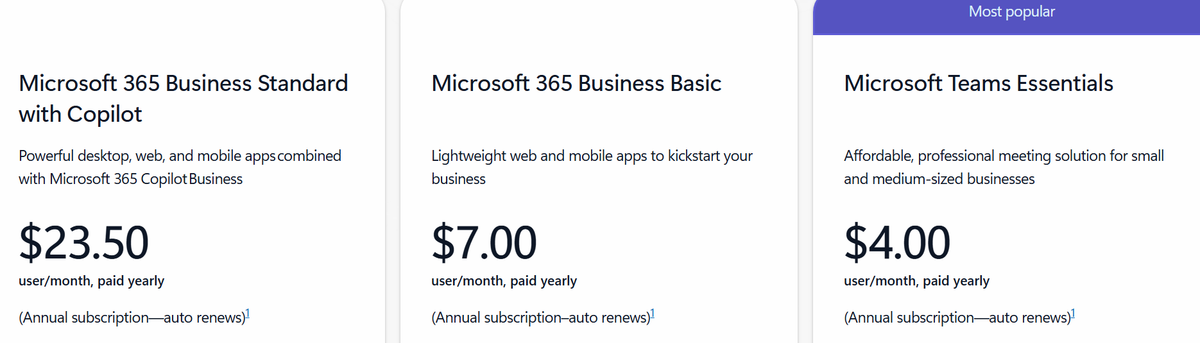
The Microsoft Teams pricing page (opens in a new tab) lists three main paid plans:
- Teams Essentials: $4 per user monthly. Includes 30-hour meetings, 300 participants, transcripts, breakout rooms, file sharing, and 10 GB of storage.
- Microsoft 365 Business Basic: $7 per user monthly. Adds Outlook email, 1 TB of storage, and web versions of Word, Excel, and PowerPoint.
- Microsoft 365 Business Standard with Copilot: $23.50 per user monthly. Adds desktop apps, Loop, Clipchamp, and Copilot for writing and data analysis.
Business Basic and Standard also include collaboration tools such as Microsoft Bookings, Planner, and Forms. All prices require annual billing.
Zoom
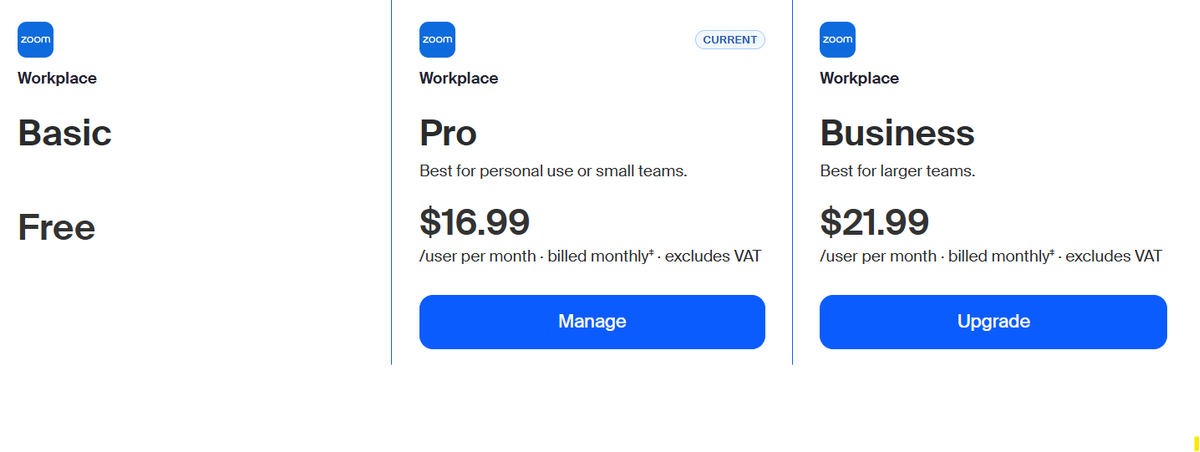
The Zoom Workplace pricing page (opens in a new tab) lists four plans:
- Basic: Free. Includes 40-minute meetings, 100 participants, local recording, virtual backgrounds (opens in a new tab), Zoom Chat, and limited AI features.
- Zoom Workplace Basic: Free for meetings lasting up to 40 minutes with 100 participants.
- Zoom Workplace Pro: $16.99 per user per month, or about $14.16 with annual billing. It includes 30-hour meetings, cloud recording, AI Companion, and 10 GB of storage.
- Zoom Workplace Business: $21.99 per user per month, or about $18.33 with annual billing. It supports 300 participants and adds advanced features such as managed domains, scheduling, and an unlimited whiteboard.
- Zoom Workplace Enterprise: Custom pricing. It supports up to 1,000 participants and includes Zoom Phone, webinars, rooms, and unlimited cloud storage.
Microsoft Teams offers better value for Microsoft 365 users. Zoom provides stronger options for external meetings, larger audiences, and centralized meeting controls.
Integration Capabilities With Third-Party Apps
Both Microsoft Teams and Zoom offer marketplaces for connecting video conferencing with other business tools.
Microsoft Teams
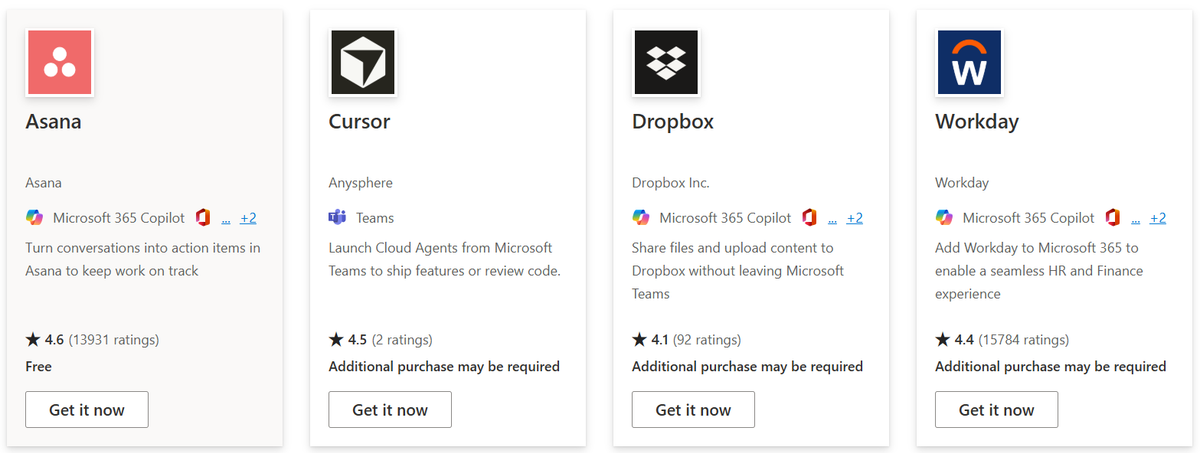
The Microsoft Marketplace (opens in a new tab) includes Asana, Trello, Dropbox, Calendly, HubSpot, Workday, Canva, Figma, and more.
These third-party apps support task management, file sharing, scheduling, CRM updates, and design collaboration within MS Teams.
Zoom
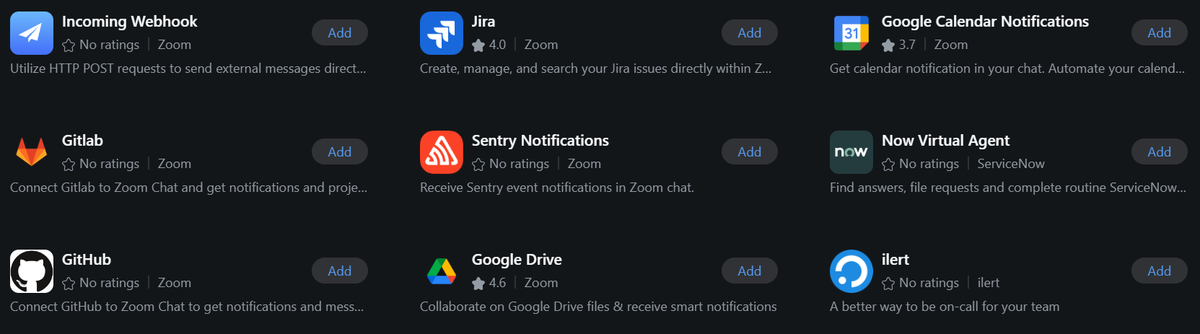
The Zoom App Marketplace (opens in a new tab) offers integrations for Zoom Meetings, Webinars, Rooms, Phone, Chat, and Contact Center.
Options include Salesforce, Slack, HubSpot, Asana, and Google Workspace for CRM, scheduling, collaboration, analytics, and customer support.
Why Choose Zoom for Your Business?
Zoom works well for external meetings, client calls, webinars, and large events. Its strengths include video quality, simple guest access, and flexible host controls.
Video and audio quality
Zoom provides HD video and several settings for improving call quality:
- Background noise suppression and echo cancellation
- Low-light adjustment and custom virtual backgrounds
- Original Sound for music, performances, and high-quality audio
- Screen sharing (opens in a new tab) with options for video and computer audio
Easy setup and guest access
Participants can join through the desktop app, mobile apps, or a web browser. External guests can use a Zoom meeting link (opens in a new tab) without joining the host’s organization.
Hosts can also use:
- Waiting rooms (opens in a new tab) and meeting passwords
- Breakout rooms (opens in a new tab) for smaller discussions
- Screen sharing and remote control
- Local and cloud recording
Host controls and support for large meetings
Zoom gives hosts detailed control over participant access, audio, video, chat, and screen sharing. Hosts can assign co-hosts, remove participants, lock meetings, and manage breakout rooms.
Other engagement and administration features include:
- Polls for collecting feedback (opens in a new tab)
- Saved Zoom chat (opens in a new tab)
- Webinars (opens in a new tab) and town halls
- Large Meeting add-ons supporting up to 5,000 participants
Zoom Business supports 300 participants, while Enterprise supports up to 1,000.
For meeting documentation, Tactiq transcribes Zoom meetings (opens in a new tab) and creates searchable transcripts without manual notes.
Why Choose Microsoft Teams for Your Business?
Microsoft Teams works well for internal meetings, file sharing, and ongoing collaboration. It offers the most value to organizations already using Microsoft 365.
Microsoft 365 integration
Teams connects directly with Word, Excel, PowerPoint, Outlook, OneDrive, and SharePoint. Users can open, share, and edit files without leaving a Teams channel or chat.
Key collaboration features include:
- Channels for organizing conversations by team or project
- Real-time file sharing and co-editing
- Screen sharing (opens in a new tab) with PowerPoint Live
- Polls (opens in a new tab) through Microsoft Forms
- Live transcription with Tactiq (opens in a new tab)
Lower-cost paid plans
Microsoft Teams offers more affordable paid plans than Zoom. Teams Essentials starts at $4 per user monthly with annual billing, compared with approximately $14.16 for Zoom Pro under annual billing.
The Essentials plan includes 30-hour group meetings, 300 participants, breakout rooms, recordings, transcripts, and 10 GB of storage. Businesses can upgrade when they need Microsoft 365 apps, business email, additional storage, or advanced AI features.
Built for internal collaboration
Microsoft Teams combines video calls, group chats, file storage, and task management within one unified communications platform. This structure suits remote teams that manage projects and recurring internal meetings.
Teams users can also:
- Join meetings (opens in a new tab) through a link, code, or calendar
- Test their audio before a call (opens in a new tab)
- Use custom virtual backgrounds (opens in a new tab)
- Manage tasks through Planner and Microsoft To Do
- Host webinars and internal town halls on supported plans
Which Is Better: Zoom or Microsoft Teams?
The better video conferencing tool depends on your main use case:
- Choose Microsoft Teams for internal collaboration, Microsoft 365 integration, and lower-cost paid plans.
- Choose Zoom for external meetings, video quality, host controls, webinars, and large audiences.
Zoom remains widely used by larger organizations. Enterprise customers now generate over 60% of its revenue (opens in a new tab).
💡 Pro tip: Tactiq transcribes meetings on both platforms. Connect Tactiq MCP (opens in a new tab) to Claude or another compatible tool to search transcripts and retrieve past decisions.
How Tactiq Enhances Your Zoom and Microsoft Teams Meetings
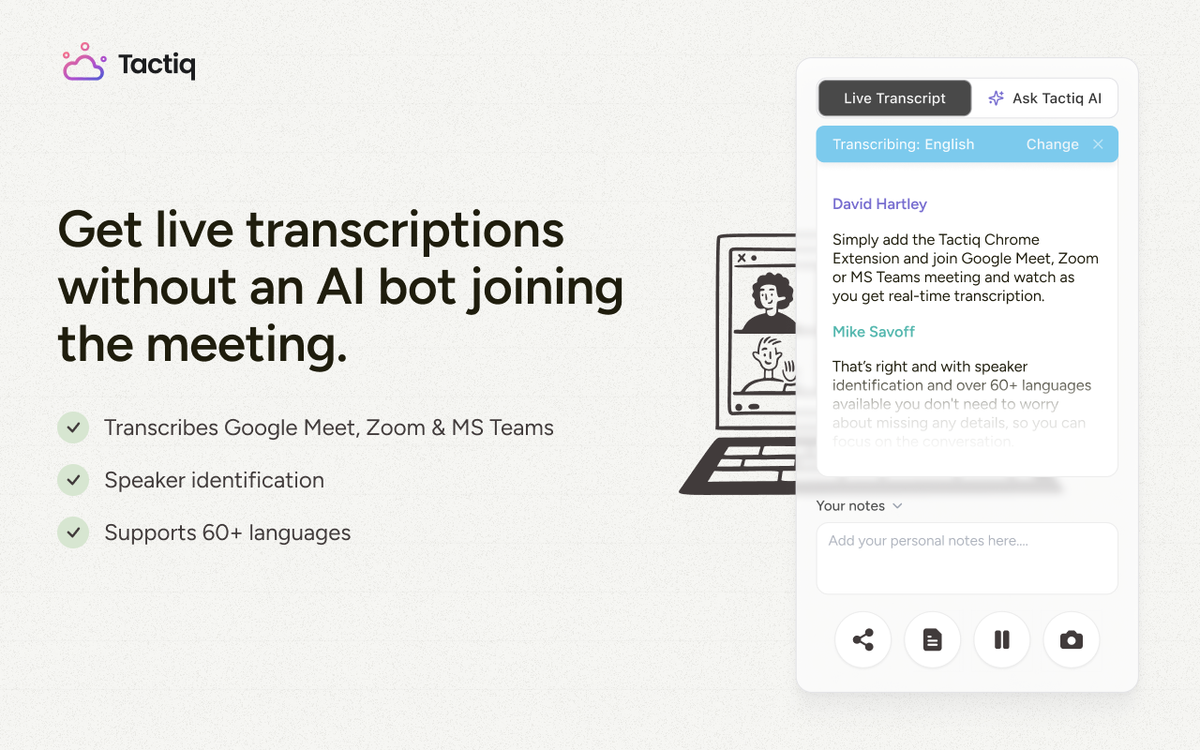
Using Teams for internal meetings and Zoom for external calls can split meeting records across two platforms. Tactiq (opens in a new tab) keeps them in one searchable workspace.
It provides live transcription and AI summaries without recording. After each call, you can review key points and continue working with the transcript.
- Ask AI: Ask questions during or after a meeting and receive answers with supporting quotes. For example, you can find a customer concern or confirm a project decision.
- AI Workflows (opens in a new tab): Turn meeting insights into follow-up emails, CRM updates, Linear issues, or messages for Slack and Microsoft Teams.
- Daily Digest: Review recent meeting decisions, action items, and follow-ups in one consolidated update.
- Tactiq MCP (opens in a new tab): Available on the Tactiq Business plan (opens in a new tab), this feature lets Claude, ChatGPT, Cursor, and other compatible tools access your meeting transcripts. Use it to find past decisions and compare discussions across Zoom and Microsoft Teams.
Tactiq provides the same post-meeting workflow across Zoom and Microsoft Teams. Install the free Tactiq Chrome extension (opens in a new tab) to keep your meeting history connected.
FAQ
Your questions, answered.
If you have any further questions, Get in touch (opens in a new tab) with our friendly team
Which is better, Zoom or Microsoft Teams?
Microsoft Teams vs. Zoom: Which is better for small businesses?
Which is cheaper in 2026, Zoom or Microsoft Teams?
Does Tactiq work with both Zoom and Microsoft Teams?
Which platform has better AI features?
Related articles

Zoom ChatGPT: How to Connect and Access Meetings

Zoom MCP: Features, Setup, and Limitations (Full Guide)

Zoom Workplace and Zoom Meetings Difference: What You Need to Know

What Is Zoom Cloud Meeting App?

Zoom Cloud Meetings for Mac: Full Guide

Zoom Meeting Statistics 2026: Usage, Revenue & Data

How to Edit Zoom Recording: A Complete Guide

How to Record Yourself on Zoom
Want the convenience of AI summaries?
Try Tactiq for your upcoming meeting.
Bringing AI into your meetings has never been so easy.
Add to Chrome - It's free!(opens in a new tab)Try Tactiq in your upcoming meeting!
Sign up now