
Write Perfect Meeting Minutes With These 8 Templates
- Published:
- December 8, 2023
- Updated:
- October 19, 2026

TL;DR: Need to write better meeting minutes? This post gives you real examples and free templates for different meeting types. From project updates to client calls. But if you want to skip manual note-taking entirely, Tactiq automatically generates clean, structured summaries and action items from your Zoom and Google Meet calls.
After a meeting, you shouldn’t have to piece together who agreed to do what. A meeting minutes template gives you a consistent way to record decisions, responsibilities, and deadlines.
You don’t have to fill it out while keeping up with the conversation, either. AI can draft minutes from your meeting transcript, ready for you to review and share.
This guide covers:
- Eight free meeting minutes templates
- What to include in your minutes
- How to fill your template using AI and meeting transcripts
TL;DR: What Is a Meeting Minutes Template?
A meeting minutes template is a reusable document for recording attendance, agenda items, decisions, and action items. It gives your meeting documentation a consistent structure for future reference.
Choose a format for your meeting type, then complete it manually or use AI to draft minutes from a transcript.
What to Include in a Meeting Minutes Template
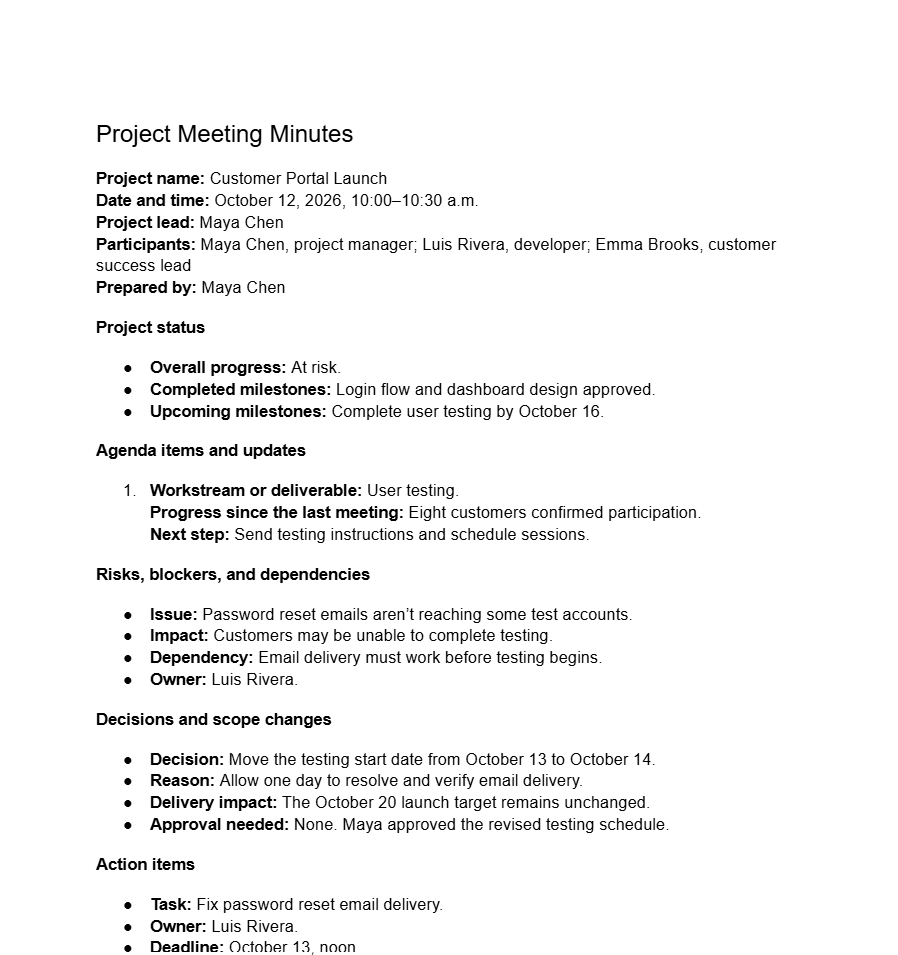
When someone reviews past meetings, they should quickly see what changed and what tasks still need attention. Include these eight key components:
- Meeting title and date. State the meeting name, date, and time.
- Attendees and absentees. List who was present and who couldn’t attend.
- Meeting agenda. Include the agenda items to organize the record by topic.
- Key discussion points. Summarize relevant updates and the reasoning behind decisions.
- Decisions made. Clearly distinguish agreed decisions from proposals still under consideration.
- Action items. Record each task, the responsible person, and the deadline.
- Next meeting date. Add the confirmed date or mark it as pending.
- Supporting documents. Link reports, presentations, or other materials referenced during the session.
For formal board meetings, add fields for motions, voting results, and approval of previous minutes.
💡 Pro tip: Tactiq (opens in a new tab) transcribes Google Meet, Zoom, and Microsoft Teams meetings live, so you can focus on the discussion. Afterward, use the transcript to draft minutes and check decisions, owners, and deadlines.
8 Free Meeting Minutes Templates for Every Meeting
The right meeting minutes template depends on your meeting type and how your team will use the record. Copy any template below into Word or Google Docs, then adjust the fields to match your process.
1. Simple meeting minutes template
Use this simple template for short business meetings with a few discussion topics. It keeps decisions and follow-ups easy to find.
Meeting Minutes
Meeting title: [Title]
Date and time: [Date, start time, and end time]
Location or meeting link: [Location or URL]
Attendees: [Names]
Absentees: [Names]
Prepared by: [Name]
Agenda items
- [First topic]
- [Second topic]
- [Third topic]
Discussion summaries
- Topic: [Agenda item]
- Key points: [Brief summary]
Decisions made
- [Decision and relevant context]
Action items
- Task: [What needs to happen]
- Responsible person: [Name]
- Due date: [Deadline]
Next meeting: [Date and time]
Supporting documents: [Links to relevant materials]
2. Formal board meeting minutes template
Use this format for board meetings requiring an official record of motions, votes, and approvals. For preparation guidance, see how to take board meeting minutes (opens in a new tab).
Board Meeting Minutes
Organization: [Name]
Meeting date and time: [Date and start time]
Location: [Venue or meeting link]
Chair: [Name]
Minutes prepared by: [Name]
Attendance
- Board members present: [Names]
- Board members absent: [Names]
- Guests: [Names and roles]
- Quorum confirmed: [Yes or no, according to the organization’s rules]
Call to order
- [Chair’s name] called the meeting to order at [Time].
Approval of previous minutes
- Previous meeting: [Date]
- Corrections requested: [Details or none]
- Approval outcome: [Approved, approved with corrections, or deferred]
Agenda items and reports
- Agenda topic: [Title]
- Discussion summary: [Essential information]
- Supporting documents: [Report titles or links]
Motions and voting results
- Motion: [Exact wording]
- Proposed by: [Name]
- Seconded by, if required: [Name]
- Votes: [For, against, and abstentions]
- Outcome: [Carried, defeated, or deferred]
- Conflicts of interest: [Disclosures and recusals, if applicable]
Assigned responsibilities
- Action item: [Task]
- Owner: [Name]
- Deadline: [Date]
Next meeting: [Date, time, and location]
Adjournment time: [Time]
Minutes approval: [Approving body or person and approval date]
3. Team and staff meeting minutes template
Use this minutes template for recurring team meetings that cover department updates, shared priorities, and follow-ups. Sales managers can adapt the agenda using these sales meeting agenda templates (opens in a new tab).
Team and Staff Meeting Minutes
Team or department: [Name]
Date and time: [Date and time]
Meeting lead: [Name]
Attendees: [Names]
Prepared by: [Name]
Previous action items
- Task: [Previous commitment]
- Owner: [Name]
- Progress: [Complete, in progress, or blocked]
Team updates
- Person or department: [Name]
- Update: [Progress, results, or upcoming work]
- Support needed: [Request or none]
Discussion points
- Topic: [Priority, challenge, or proposal]
- Summary: [Relevant details]
- Decision or unresolved question: [Outcome]
Priorities before the next meeting
- [Priority and expected result]
Action items and responsibilities
- Task: [Agreed next step]
- Owner: [Name]
- Deadline: [Date]
Announcements: [Updates affecting the team]
Next meeting date: [Date and time]
Supporting documents: [Links]
4. Project meeting minutes template
Use this meeting minutes template when project updates involve changing deadlines, dependencies, or scope. It helps managers record what affects delivery and which decisions need attention.
Project Meeting Minutes
Project name: [Name]
Date and time: [Date and time]
Project lead: [Name]
Participants: [Names and roles]
Prepared by: [Name]
Project status
- Overall progress: [On track, at risk, or delayed]
- Completed milestones: [Deliverables finished]
- Upcoming milestones: [Deliverables and target dates]
Agenda items and updates
- Workstream or deliverable: [Name]
- Progress since the last meeting: [Update]
- Next step: [Planned work]
Risks, blockers, and dependencies
- Issue: [Description]
- Impact: [Effect on timeline, budget, or scope]
- Dependency: [Input or task required]
- Owner: [Person responsible for resolving it]
Decisions and scope changes
- Decision: [Agreed change]
- Reason: [Relevant meeting context]
- Delivery impact: [Revised deadline, cost, or requirements]
- Approval needed: [Person or none]
Action items
- Task: [Agreed action]
- Owner: [Name]
- Deadline: [Date]
Open questions: [Items awaiting clarification]
Next review: [Date and time]
Supporting documents: [Project plan, tracker, or reference links]
5. Client meeting minutes template
Use this meeting minutes template when client feedback could change deliverables, deadlines, or expectations. Separate confirmed agreements from requests your team still needs to assess.
Client Meeting Minutes
Client or organization: [Name]
Project or account: [Name]
Date and time: [Date and time]
Client participants: [Names and roles]
Internal participants: [Names and roles]
Prepared by: [Name]
Meeting purpose
- [What both sides need to resolve or confirm]
Deliverables reviewed
- Deliverable: [Name or link]
- Client feedback: [Requested revisions or comments]
- Approval status: [Approved, revisions needed, or awaiting review]
Requests and expectations
- Request: [Client requirement]
- Assessment needed: [Feasibility, pricing, or timeline check]
- Response owner: [Name]
Confirmed agreements
- [Agreed deliverable, deadline, or scope]
- [Acceptance criteria or conditions]
Action items
- Task: [Next step]
- Owner: [Name and client or internal team]
- Deadline: [Date]
Pending confirmations: [Questions requiring a response]
Next client check-in: [Date and time]
Supporting documents: [Proposal, brief, or deliverable links]
6. Standup and Scrum meeting minutes template
Use this format to capture progress, blockers, and changes to the team’s plan without documenting every update. For Scrum-specific guidance, see our Scrum meeting guide (opens in a new tab).
Standup and Scrum Meeting Minutes
Team: [Name]
Date and time: [Date and time]
Sprint, if applicable: [Sprint name or number]
Sprint goal or current priority: [Goal]
Participants: [Names]
Progress updates
- Team member: [Name]
- Completed since the last check-in: [Work finished]
- Planned next: [Work supporting the goal]
- Blockers: [Issue or none]
Changes to the plan
- Adjustment: [Change to work or priorities]
- Reason: [What prompted the change]
Blocker follow-ups
- Issue: [What needs resolving]
- Owner: [Person coordinating the next step]
- Action: [Agreed response]
- Target resolution: [Date or time]
Separate discussions needed
- Topic: [Issue requiring a longer discussion]
- Participants: [People needed]
- Follow-up time: [When to discuss it]
Next standup: [Date and time]
Work tracker: [Link to the sprint board or task list]
7. Leadership meeting minutes template
Use this meeting minutes template when managers need to agree on business priorities, resource allocation, or cross-department decisions. Record what teams should communicate afterward.
Leadership Meeting Minutes
Organization: [Name]
Date and time: [Date and time]
Meeting chair: [Name]
Leaders present: [Names and departments]
Prepared by: [Name]
Business performance
- Metric or objective: [Name]
- Current result: [Performance against target]
- Attention needed: [Issue requiring leadership input]
Strategic priorities
- Priority: [Business objective]
- Proposal: [Recommended approach]
- Trade-offs discussed: [Cost, capacity, or timing considerations]
Leadership decisions
- Decision: [Agreed direction]
- Accountable leader: [Name]
- Departments affected: [Teams]
- Effective date: [Date]
Resource commitments
- Budget or staffing allocation: [Details]
- Approval status: [Approved, pending, or declined]
- Approver: [Name]
Communication plan
- Message to share: [What employees need to know]
- Audience: [Relevant teams]
- Communication owner: [Name]
- Timing: [Date]
Action items
- Task: [Next step]
- Owner: [Name]
- Deadline: [Date]
Escalations: [Issues requiring further approval]
Next leadership review: [Date and time]
Supporting documents: [Reports or planning documents]
8. Training meeting minutes template
Use this template for workshop, onboarding, or process training meetings. Capture questions and practice tasks so participants can apply what they learned.
Training Meeting Minutes
Session title: [Title]
Date and time: [Date and time]
Trainer or facilitator: [Name]
Attendance: [Participant names]
Prepared by: [Name]
Training objectives
- [Skill, knowledge, or process participants should learn]
Topics covered
- Topic: [Name]
- Key information: [Main takeaway]
- Demonstration or activity: [What participants practiced]
Questions and clarifications
- Question: [What a participant asked]
- Answer: [Confirmed explanation]
- Unresolved point: [Information still needed]
Practice tasks
- Task: [How participants should apply the training]
- Assigned to: [Person or group]
- Completion date: [Deadline]
- Success criteria: [How the task will be assessed]
Feedback and improvements
- Participant feedback: [Comments or suggestions]
- Change for future sessions: [Agreed improvement]
Follow-ups
- Action: [Resource, clarification, or support needed]
- Owner: [Name]
- Due date: [Date]
Training materials: [Slides, guides, or resource links]
Follow-up session: [Date and time, if scheduled]
Tactiq + Claude: Fill Your Meeting Minutes Template From Meeting Transcripts
After a busy project review, you need a clear record of decisions and responsibilities. Tactiq transcribes Google Meet, Zoom, and Microsoft Teams meetings live without adding a bot.
Tactiq’s verified Claude connector (opens in a new tab) uses Model Context Protocol (MCP) to connect Claude to your meeting data. Reading full transcripts requires a Tactiq Team plan or higher; Free and Pro support searching and listing meetings.
On Claude Team and Enterprise plans, an owner must enable the connector before members can connect their accounts.
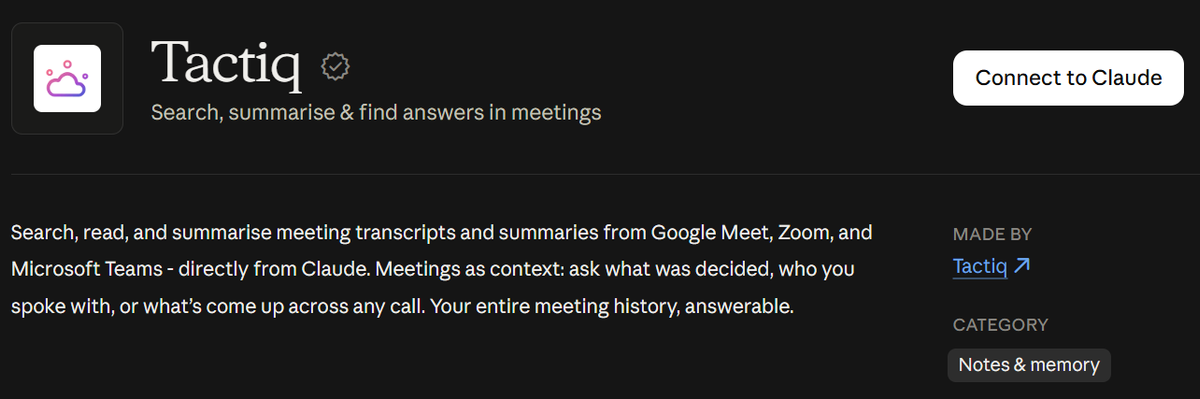
To connect and draft your minutes:
- Open Customize → Connectors in Claude, browse the directory, and select Tactiq.
- Click Connect to Claude, then Allow to authorize your Tactiq account.
- Open a Claude chat, attach your meeting minutes template, and check that Tactiq is enabled by clicking + > Connectors.
- Enter a request like this:
“Find the project review from [date] in Tactiq. Use its transcript to fill the attached meeting minutes template. Flag missing or unclear details.”
Don’t use Claude? Save your template instructions in Tactiq’s prompt groups (opens in a new tab) (AI Meeting Kit). Run the saved prompt on a transcript to draft minutes directly in Tactiq.
Install the free Tactiq Chrome extension (opens in a new tab) to capture your next meeting and draft minutes from the transcript afterward.
Keep Meeting Decisions Easy to Find
The right meeting minutes template makes follow-ups easier by giving decisions, owners, and deadlines a consistent place. Choose one of the eight formats above and adapt it to your team.
Over time, those minutes become a useful record of what changed, what was agreed, and what still needs attention.
FAQ
Your questions, answered.
If you have any further questions, Get in touch (opens in a new tab) with our friendly team
How do I write the minutes of a meeting?
Is there a meeting minutes template in Word or Google Docs?
What is the best format for meeting minutes?
What is the difference between meeting notes and minutes?
Can Claude fill my meeting minutes template from Tactiq transcripts?
Related articles

What is Gemini in Google Messages?

iCloud vs. Google Drive vs. OneDrive (Comparison Guide)

How to Write a Meeting Cancel Notice (with Templates)

5 Product Management Meeting Templates (Google Docs)

Top 10 Project Kickoff Templates (Word &Google Doc)

Must-Have Marketing Meeting Templates (Google Docs)

Scrum Meeting Agenda and Notes Template (Google Docs)

Sales Meeting Agenda (Word & Google Docs Template)
Want the convenience of AI summaries?
Try Tactiq for your upcoming meeting.
Bringing AI into your meetings has never been so easy.
Add to Chrome - It's free!(opens in a new tab)Try Tactiq in your upcoming meeting!
Sign up now