
How to Access Your Google Meet History: 2026 Complete Guide
June 14, 2022
June 14, 2022
April 27, 2026
April 27, 2026

Need to bill a client for a meeting, check meeting durations, or confirm who showed up during the call?
Accessing your Google Meet history helps you track dates, times, attendees, and call length. But finding this info isn't always easy. Unless everything's in one place, you'll waste time scrolling through calendar invites, and those don't show who actually joined or how long meetings ran.
Google Meet now includes Gemini AI tools and native transcription on select Workspace plans. But transcripts don't include speaker labels, aren't searchable across meetings, and aren't available on free or Starter accounts, so they don't replace a complete, searchable record.
In this guide, you'll learn:
- How to see your Google Meet history on any device
- Who can access the Google Meet history feature
- What Google Meet saves natively in 2026
- How to use AI tools to organize and search your meeting records more easily
Who Can Access the Google Meet History Feature
Access to Google Meet history depends on your account type.
If you have a personal Google account, you can export basic meeting data through Google Takeout, but there's no built-in history feature. You won't see attendance details or call durations unless the meeting was saved to your Google Calendar.
Google Workspace users on Business or Education plans have broader access. Google Workspace admins can view a full activity log through the admin console, including participant names, meeting dates, and durations across the organization. Regular users on Workspace plans can view their own meeting history.
As of 2026, the Google Meet REST API also allows meeting space owners and participants, not just admins, to query conference records, artifacts, and participant data. This is a meaningful expansion for developers and enterprise teams building on top of Meet data.
💡 Pro tip: Already using Google Meet for client calls but losing context between sessions? Tactiq automatically transcribes every meeting in real time and saves a searchable record.
How to See Google Meet History (All Devices)
Here's how to view your Google Meet call history and download meeting details across your devices.
How to see your Google Meet history on a MacBook or Windows PC
1. Go to Google Takeout.
2. Click Deselect all to clear all product selections.
3. Scroll down and select Google Meet.
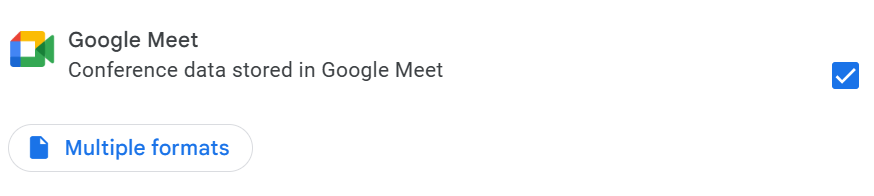
4. Click Next, then choose your preferred file type, export frequency, and destination.
5. Click Create export.
You'll receive an email once the export is ready. It will include your Google Meet history as a CSV file.
📦 New in 2026: In-Meeting Chat Now Saved to Google Chat - Google Meet messages are now linked to a persistent Google Chat thread. Internal attendees can access chat history, including shared files and links, before and after the meeting. External attendees lose access once the call ends. Available on Business Starter and above.
How to see your Google Meet history on iOS
1. Open the Meet app.
2. Tap the menu button on the upper left.
3. Tap Settings > History > Export History.
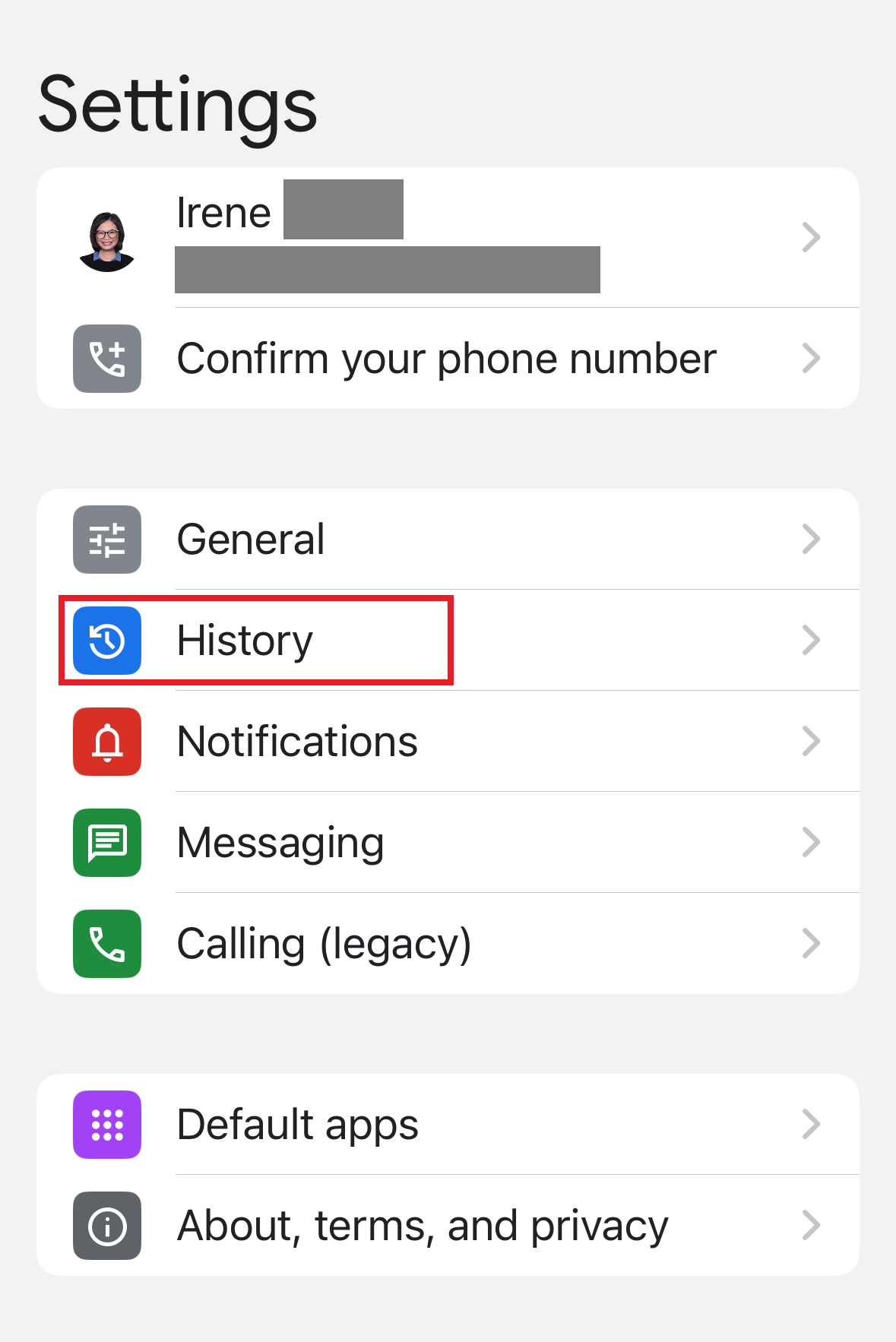
4. It will take you to Google Takeout. Select data to include, file type, frequency & destination, then tap Create Export.
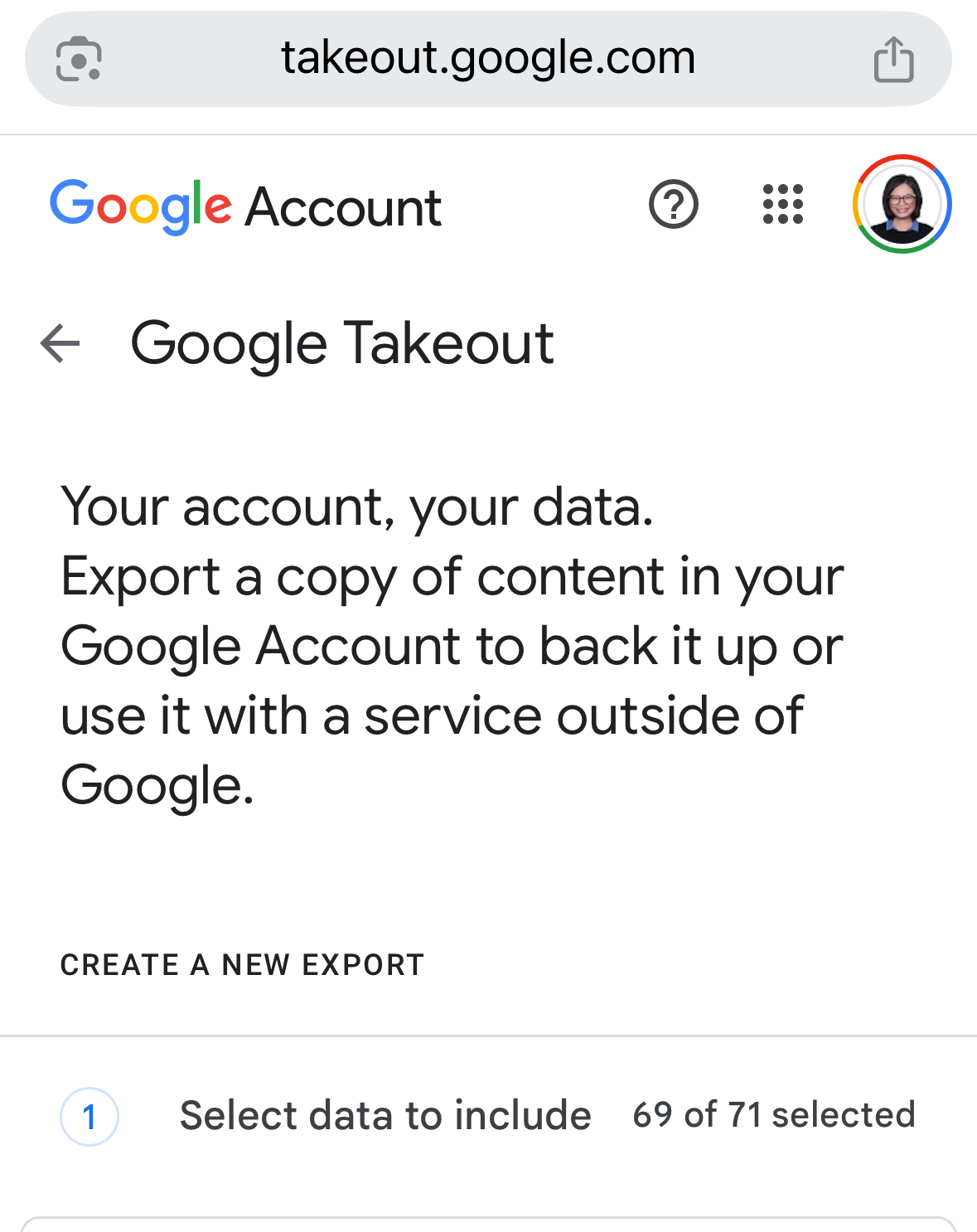
5. You will receive an email once the export is done.
How to see your Google Meet history on Android
1. Open the Meet app.
2. Tap the menu button on the upper left.
3. Tap Settings > History > Export History.
4. It will take you to Google Takeout. Select data to include, file type, frequency & destination, then tap Create Export.
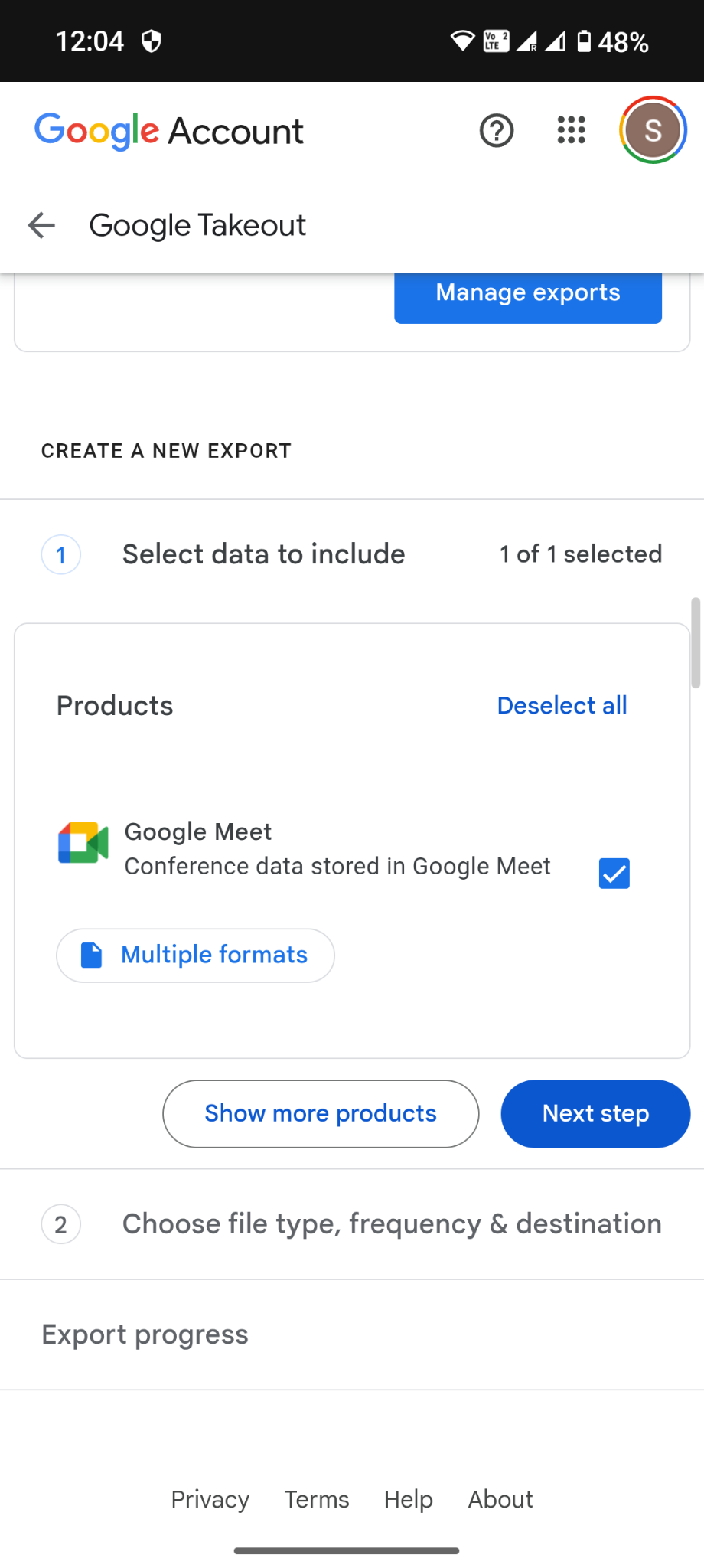
5. You will receive an email once the export is done.
🔧 New: Auto-Artifacts via the Meet API Meeting organizers can now pre-configure auto-recording, auto-transcripts, and "Take Notes for Me" via the Google Meet API, so meeting history is captured automatically without manual setup.
What Google Meet Saves Natively in 2026
Google Meet has significantly expanded its native AI features. Here's what it can capture, and where the limits are.
Ask Gemini in Meet

Launched in 2025 for Enterprise customers, Ask Gemini expanded to Business Standard in January 2026 with seven additional languages and mobile support. During a particular meeting, it can:
- Summarize the conversation and identify action items
- Catch up late joiners on what they missed
- Respond to direct prompts using captions, your Gemini notes document, and accessible Workspace files
Key limitation: Ask Gemini does not produce a full, speaker-attributed transcript or a searchable, exportable record. It supports only one language per meeting and works best as an in-session assistant, not as a documentation tool.
Take Notes for Me
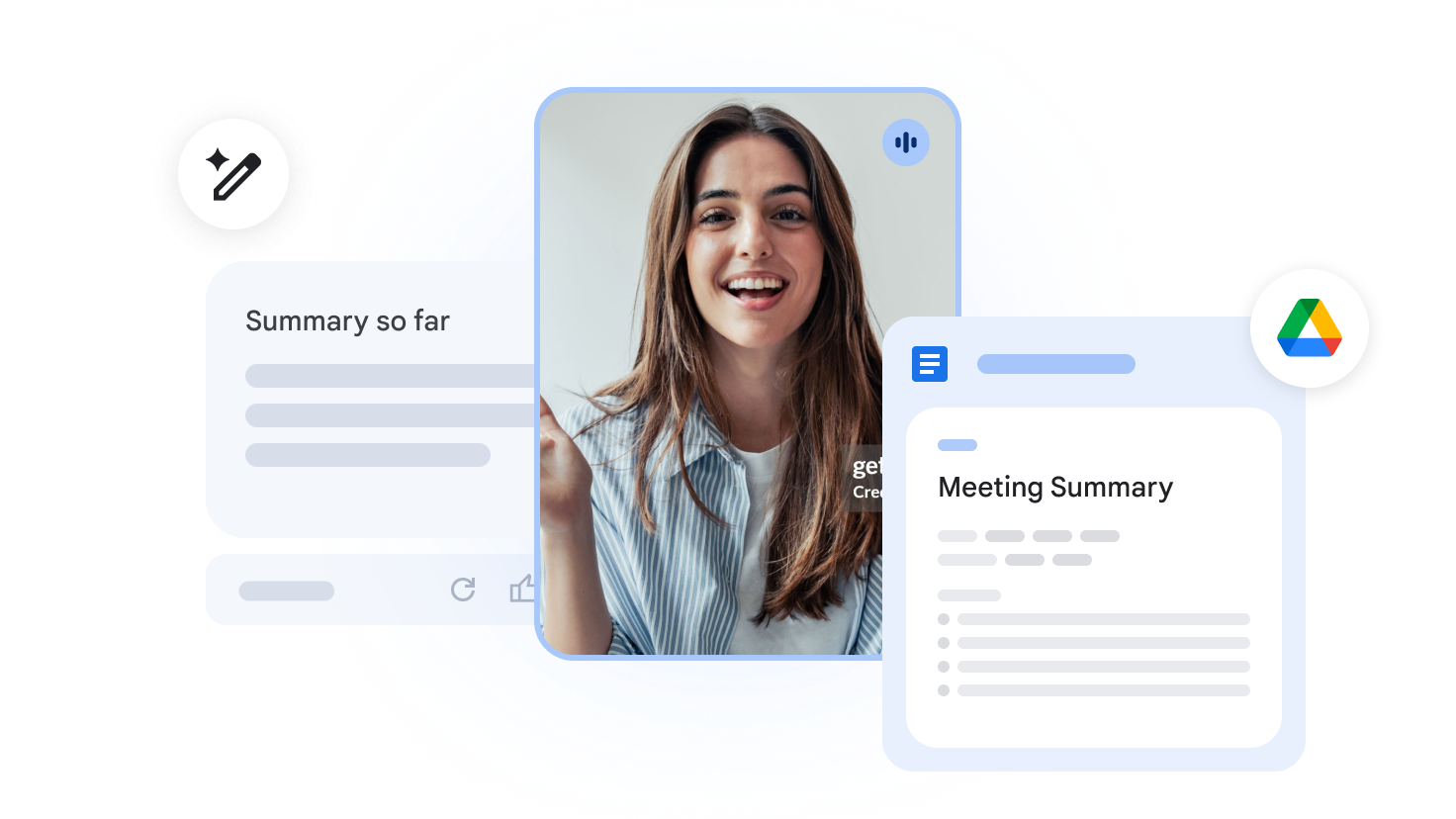
Available on the Business Standard, Business Plus, and Enterprise plans, "Take Notes for Me" uses Gemini to generate a structured notes document saved to Google Docs during the meeting. Useful as a starting point, but with real limits:
- Notes aren't searchable across past Google Meet meetings
- No integration with external tools
- Access depends on the meeting organizer's plan, not the participant's
Real-time speech translation
Launched in beta in May 2025 and generally available for Google Workspace business plans from January 2026, real-time speech translation currently supports English, Spanish, French, German, Italian, and Portuguese. Mobile support is rolling out now. One language pair per meeting is supported at this time.
In-meeting chat linked to Google Chat

Google Meet messages are now stored in a persistent Google Chat thread after the meeting. Internal attendees can access shared files, links, and pre-reads before and after the call. Available on Business Starter and above.
These native features cover basic in-session assistance. For a complete, searchable, exportable record across your Google Meet, Zoom, and Microsoft Teams meetings, a dedicated tool like Tactiq fills the gaps.
How to Save Google Meet History Using AI Tools
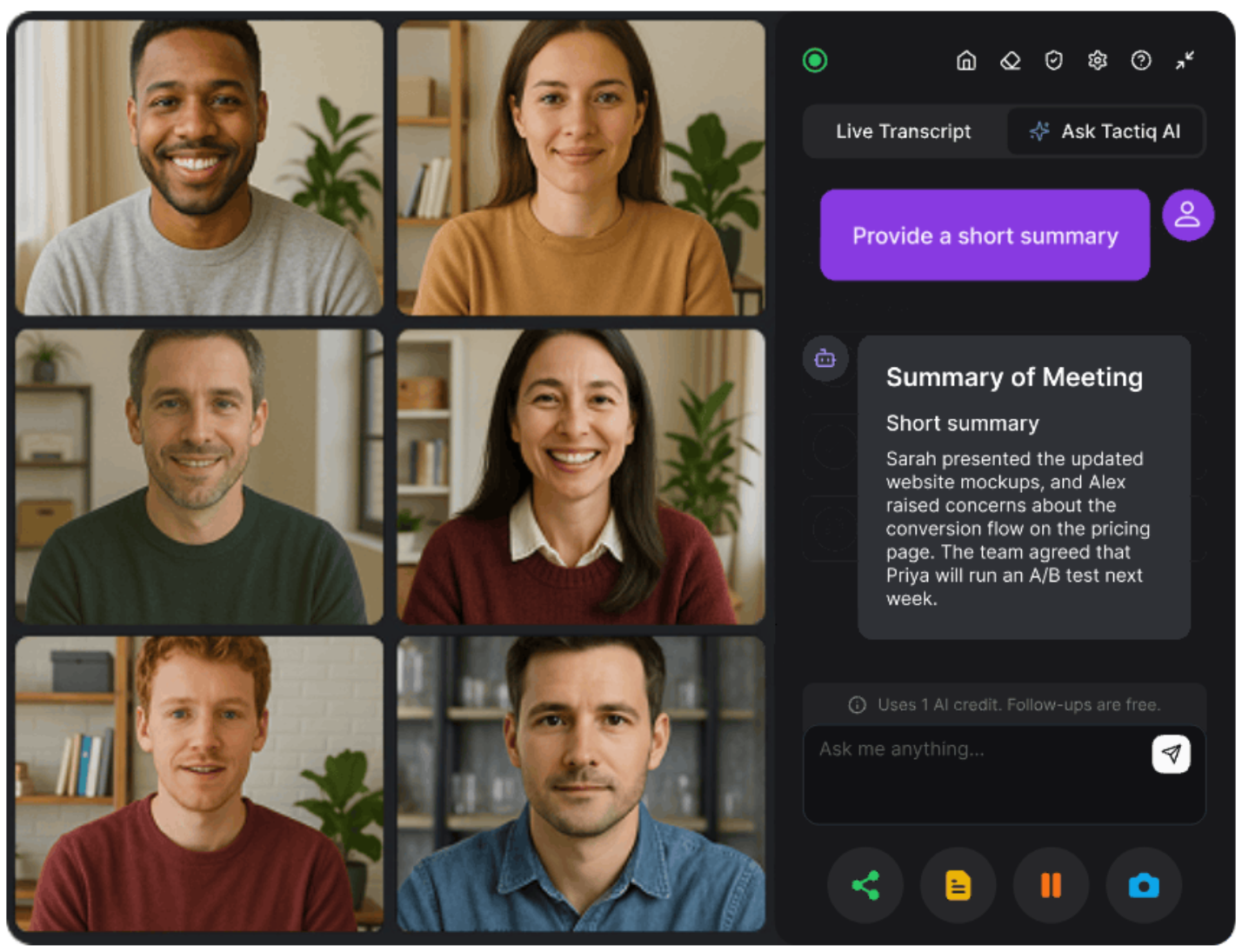
Google gives you basic meeting data. But if you need to remember what was actually discussed, you need more than a CSV file.
Saving Google Meet history with Tactiq
Tactiq is a free Chrome extension that transcribes Google Meet calls in real time. It runs without a bot joining the call, keeping your meetings professional on external client calls.
Here's how to get started:
- Install the Tactiq Chrome Extension.
- Enable the toggle for Google Meet on the setup page, then click Continue.
- Join any Google Meet call. Tactiq starts transcribing automatically.
Transcriptions are saved with date, time, participants, and duration. From your dashboard, you can view your full Google Meet history, export transcripts to Notion or Google Docs, and filter by attendees or keywords.
Tactiq's AI features
- Live transcription in 60+ languages with speaker identification across Google Meet, Zoom, and Microsoft Teams; no bot required.
- AI summaries and action items are generated instantly after each meeting, tagged by the speaker.
- In-meeting AI: Ask questions and surface decisions in real time, available across all three platforms, unlike Gemini, which is Meet-only.
- AI Meeting Kits and custom prompts: Pre-built templates for summaries, follow-ups, and sales recaps. Ready to use immediately.
- AI Workflows and integrations: Connect to Slack, HubSpot, Linear, Notion, Zapier, Asana, and Google Drive to automate post-meeting tasks.
- Enterprise-grade security: ISO 27001, SOC 2 Type II, GDPR, and HIPAA compliant. Includes SAML SSO and configurable data retention.
Install the free Tactiq Chrome extension to start capturing your Google Meet history today.
Searching Through Your Google Meet History with Tactiq
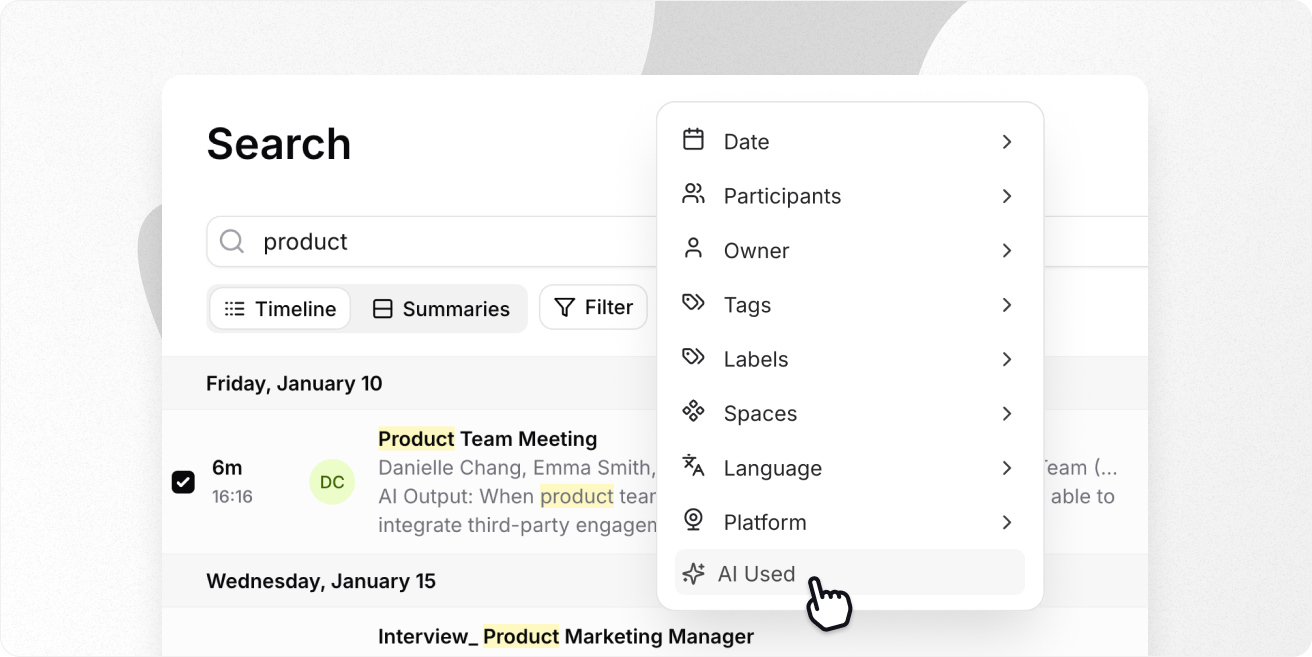
Once your Google Meet sessions are saved in Tactiq, finding past meetings takes seconds. Search by attendees, meeting titles, or keywords spoken during the call.
Each meeting includes a full transcript, participant list, date, time, and duration. Jump directly to specific moments without replaying the whole call.
Enterprise teams can use Team Spaces to access shared meeting history, filter by project or attendee, and receive team digests, available on Team and higher plans.
Exploring other platforms? Check out our list of Google Meet alternatives to compare features.
{{rt_cta_ai-convenience}}
Wrapping Up
Accessing your Google Meet history is no longer limited to admins. On any device, you can export past meeting details to stay organized, document work, and follow up with confidence.
Google Meet's native Gemini tools handle in-session assistance. Tactiq handles the full lifecycle (transcription, search, export, and workflow automation) across Google Meet, Zoom, and Microsoft Teams.
Download the free Tactiq Chrome extension today to start saving and searching your Google Meet history.
Yes. All Google users can export their Meet history through Google Takeout. Workspace users can also view meeting details through the admin console.
Yes, but it depends on your plan. Attendance tracking and live stream reports are available on select Workspace editions. Admins manage these settings through the admin console.
No. Google Meet doesn't offer a "last seen" feature. You can only view participation data for individual meetings if attendance tracking is enabled.
Recordings are saved to your Google Drive under the "Meet Recordings" folder. For full instructions, see our guide on Google Meet recording.
Not with Google Meet alone. With Tactiq, every transcribed meeting is fully searchable by speaker, keyword, or topic.
Related articles


_Main.jpg)




Want the convenience of AI summaries?
Try Tactiq for your upcoming meeting.
Want the convenience of AI summaries?
Try Tactiq for your upcoming meeting.
Want the convenience of AI summaries?
Try Tactiq for your upcoming meeting.