
How to Add Google Calendar to Notion
August 25, 2023
August 25, 2023
May 14, 2026
May 14, 2026

Managing your schedule across two tools can slow you down. Google Calendar handles your events, while Notion holds your tasks, notes, and projects. Keeping both in sync usually means toggling between apps and copying things manually.
The good news: there are several ways to connect Google Calendar and Notion, from a simple embed on a Notion page to automated workflows that update your Notion workspace in real time.
In this article, you'll learn:
- How to sync Google Calendar with Notion Calendar
- Where to find Notion Calendar in your workspace
- How to share a Google Calendar link in Notion
- How to embed Google Calendar in Notion
- How to automate two-way sync with Zapier or Make
- How to save meeting notes directly to Notion with Tactiq
How to Sync Google Calendar-Notion Calendar
Notion Calendar is a free, standalone app that connects your Google Calendar with your Notion workspace. It's separate from the main Notion app, so you'll need to download it first.
Follow these steps to get set up:
1. Go to notion.com/product/calendar and download the app for Mac, Windows, iOS, or Android.
2. Open Notion Calendar and sign in with your Notion account.
3. Click your profile picture on the upper right > click Settings > Add calendar account, and connect your Google account. You can add multiple Google accounts if needed.
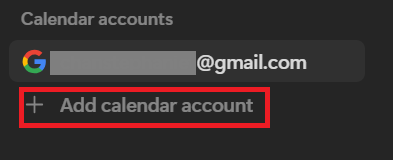
4. Allow Notion Calendar access to your Google account by granting the necessary permissions. This access lets Notion Calendar sync with your Google Calendar.
5. Follow the additional prompts to complete the setup process. Your Google Calendar events will now be visible in Notion Calendar.

Your Google Calendar events will now appear inside Notion Calendar, together with any dated items from your connected Notion databases.
Things to know before you sync
Before diving in, it helps to understand how this connection actually works:
- Notion Calendar displays your Google Calendar events inside the app. It does not import those events into a Notion database.
- The native connection runs one way: Google Calendar feeds into Notion Calendar, not the other way around.
- If you plan to use the embed methods below and have concerns about making your calendar public, see our guide on how to make Google Calendar private.
- Notion Calendar also supports Apple iCloud. Microsoft Outlook support is still on the roadmap.
- For true two-way sync between Notion databases and Google Calendar, see Method 3 below.
💡 Pro Tip: Tactiq transcribes your Zoom, Google Meet, or Microsoft Teams calls and automatically sends structured notes straight to your Notion workspace. Install the Tactiq Chrome extension to get started.
Where to Find Notion Calendar
You can access Notion Calendar in two ways:
- Direct link: Head to calendar.notion.so to open Notion Calendar in your browser.
- From Notion: Look for Notion Calendar in the left panel of any Notion page.
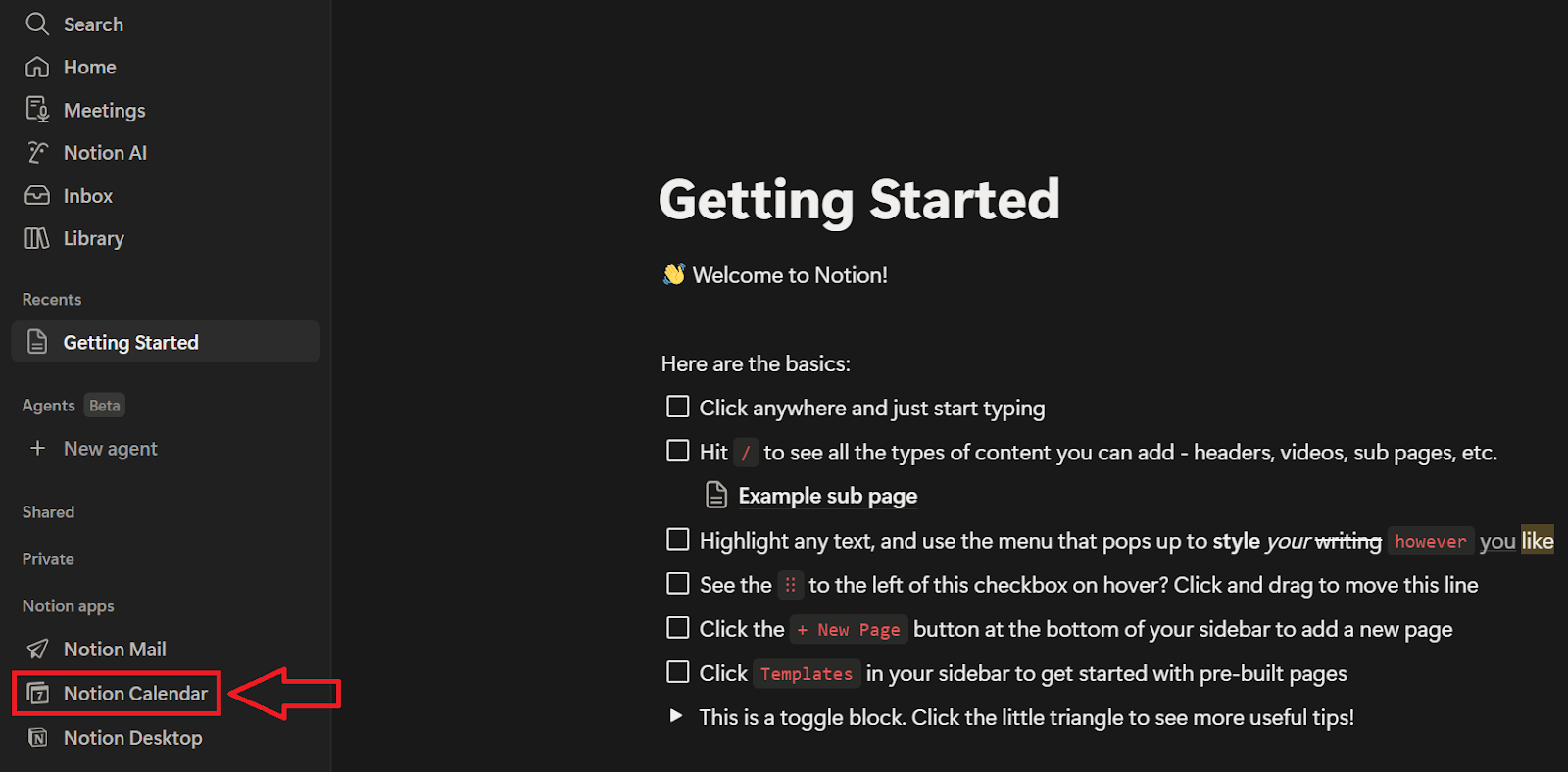
Already in a meeting and need your notes nearby? Open Notion Calendar from the left panel in Notion and link a Notion page directly to your calendar event. You'll have your agenda, notes, and context one click away before your next call.
More Ways to Add Google Calendar to Notion
The native Notion Calendar sync is a great starting point. But depending on how you work, you may need more flexibility. Here are three more ways to connect Google Calendar and Notion.
Method 1: Share a Google Calendar Link in Notion
Sharing a Google Calendar link on a Notion page lets anyone with the link view your calendar in a browser. It takes just a few clicks to set up.
1. Open Google Calendar and find your calendar under My calendars in the left panel.
2. Hover over the calendar name, click the three-dot icon, and select Settings and sharing.

3. In the left panel, click Access permissions for events.
4. Check Make available to public, then click Get shareable link.

5. Click Copy link.
6. Open your Notion page, paste the link, and select Dismiss from the pop-up menu.
Anyone with the link can now view your public Google Calendar from a browser. For more ways to share your calendar, check out our guide on how to share your Google Calendar.
Method 2: Embed Google Calendar in Notion
Embedding your Google Calendar gives you a calendar preview directly on a Notion page, with no extra apps required. Keep in mind that the embedded view is read-only, requires a public calendar, and offers limited visual customization.
1. Open Google Calendar and go to Settings and sharing for your chosen calendar.
2. Under Access permissions for events, check Make available to public.
3. In the left panel, click Integrate calendar.
4. Copy the Public URL to this calendar.
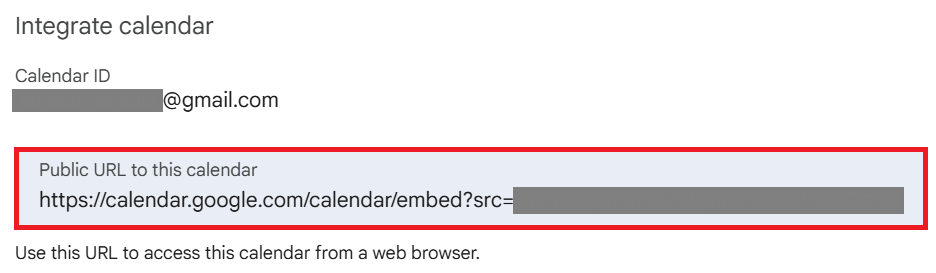
5. Go to your Notion page, paste the URL, and select Embed from the pop-up menu.
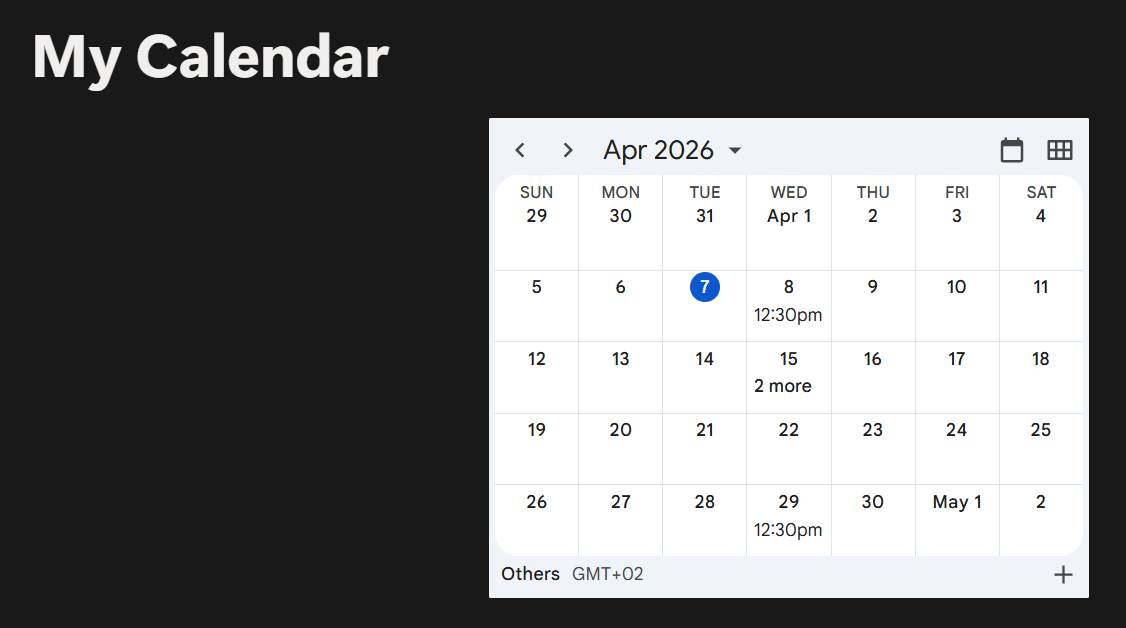
Your Google Calendar will now appear as an embedded calendar view on your Notion page.
Method 3: Automate Sync with Zapier or Make
For teams that need Notion database tasks to trigger new Google Calendar events, or vice versa, automation tools are the way to go. Both Zapier and Make (formerly Integromat) let you connect Google Calendar and Notion without writing any code.
With Zapier, you set up a trigger and an action. For example, a new Notion database entry can automatically create a new Google Calendar event. Make offers a similar functionality with more advanced workflow logic for power users.
Both tools typically require a subscription cost. Good use cases include content calendars, project milestones, and onboarding workflows.
How to Keep Your Meeting Notes in Notion with Tactiq
Notion is where your work lives. But without a way to capture what happens in meetings, your workspace stays incomplete. Tactiq connects the two by transcribing your calls in real time and automatically sending structured notes straight to your Notion database.
The problem with manual meeting notes
Copying meeting notes into Notion by hand is slow and error-prone. Details get lost, action items get missed, and by the time you sit down to write everything up, the context has faded. There's a faster way.
Native Tactiq-Notion integration via Workflows
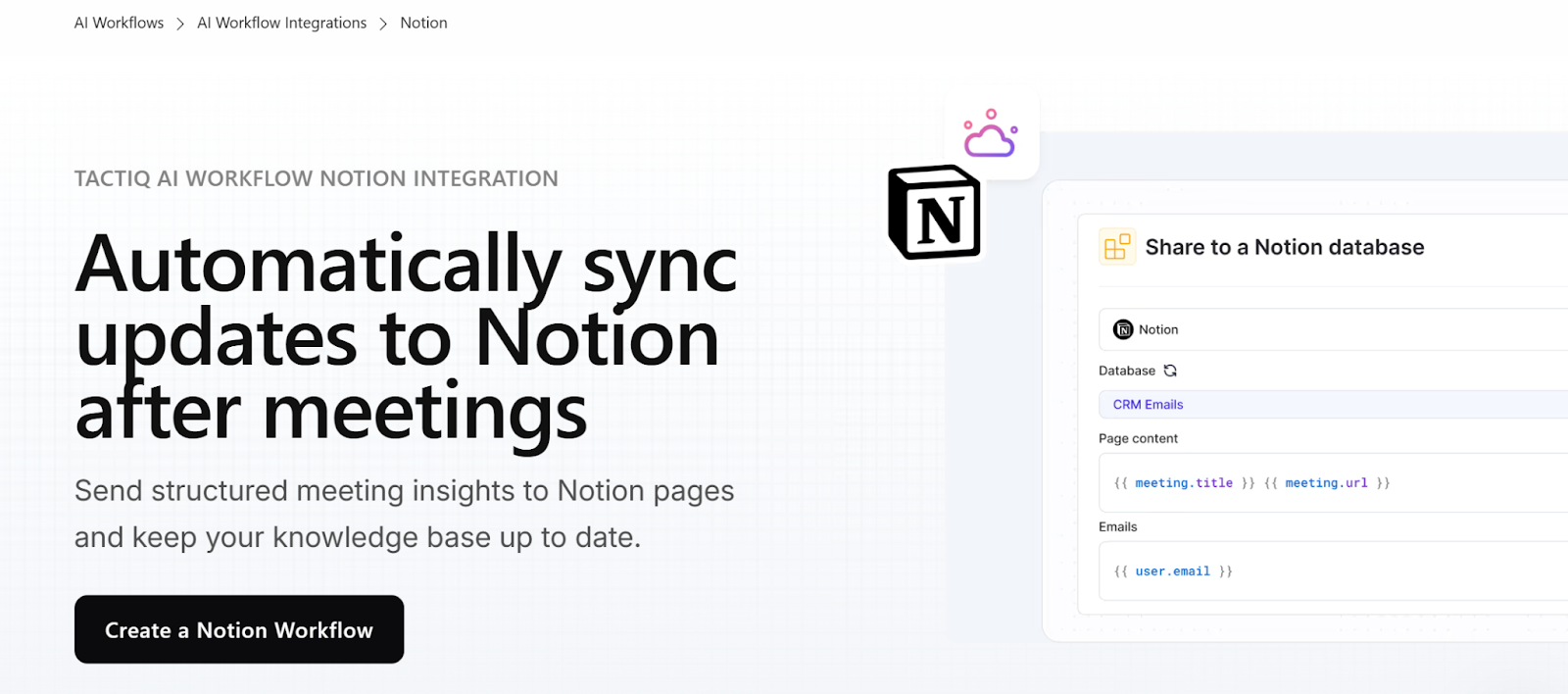
Tactiq has a built-in Workflows feature that sends structured meeting notes directly to your Notion workspace after every call. No Zapier required.
Here's how to set it up:
1. Download the Tactiq Chrome extension and create an account.
2. Open the Tactiq dashboard and go to Account Settings → Integrations.
3. Find Notion and click Connect, then authorize access and select the Notion pages Tactiq can write to.
4. Join a meeting on Zoom, Google Meet, or Microsoft Teams. Tactiq will transcribe the conversation in real time.
5. Once the meeting ends, go to My Workflows, then click New Workflow.
6. Select the "Create page with summary in Notion DB with confirmation step" template. This template generates a meeting summary, lets you review and edit it, then automatically creates a new Notion page in your chosen workspace.
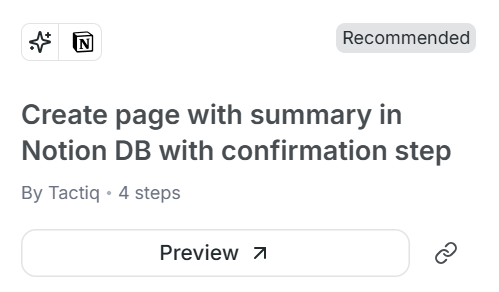
7. Duplicate the template to save your own copy.
8. Set your trigger type to Automatic and add conditions such as meeting title keyword or participant name to control which meetings the workflow applies to.
9. Click Allow Access to connect Tactiq to your Notion account, then choose the database where you want notes stored.
10. Click Save.
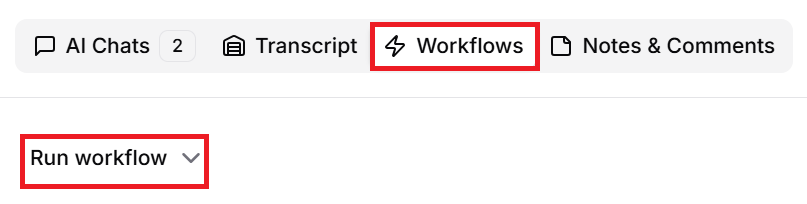
11. Select a transcript from My Meetings > click the Workflows tab > click Run Workflow > select the workflow to apply the workflow to a call.
Once set up, every meeting summary is automatically structured, formatted, and stored in the right Notion database. Teams can share workflows with teammates in one click, so everyone gets consistent, structured notes from every meeting.
For more on building meeting note workflows in Notion, check out How to Automate Your Meeting Notes in Notion and How to Create a Notion Meeting Note Template in Tactiq.
Install the Tactiq Chrome extension →
Zapier as an alternative
If your team already uses Zapier, you can connect Tactiq and Notion through a Zap. Set the trigger to "meeting transcript ready in Tactiq" and the action to create a new Notion database item. It's a solid option for teams with existing Zapier-based workflows.
Explore the Tactiq + Zapier integration →
Keep Your Calendar and Meeting Notes in One Place
Google Calendar and Notion work better together. This article covered four ways to make that happen: syncing via Notion Calendar, sharing a calendar link, embedding Google Calendar on a Notion page, and automating two-way sync with Zapier or Make.
But keeping your calendar organized is only half the equation. Meetings still need to be captured, summarized, and stored somewhere useful. Tactiq closes that gap by transcribing your calls in real time and automatically sending structured notes straight to your Notion workspace.
Add Tactiq to Chrome for free.
Frequently Asked Questions on Adding Google Calendar to Notion
How does Notion Calendar help you manage your schedule more efficiently?
Notion Calendar brings your Google Calendar events and Notion database deadlines into one view, so you can see your schedule and your work in one place.
What are the steps to sync Google Calendar with Notion Calendar?
Download Notion Calendar, sign in with your Notion account, go to Settings, and add your Google account under Calendar accounts. Then link your Notion workspace.
What are the different ways to add Google Calendar to Notion?
You can sync via Notion Calendar, share a public calendar link on a Notion page, embed Google Calendar using a public URL, or automate sync with Zapier or Make.
How can Tactiq simplify keeping meeting notes in Notion?
Tactiq transcribes your meetings in real time and uses Workflows to automatically send structured summaries to your chosen Notion database after every call.
Where can you find and access Notion Calendar within your workspace?
You can access Notion Calendar at calendar.notion.so or from the left panel of any Notion page.
Notion Calendar unifies your work and personal commitments in one place, so you no longer need to switch between different apps. This streamlined view saves you time and helps you stay organized throughout your day.
First, download and install Notion Calendar, then sign in with your Google account and grant the necessary permissions. After completing the setup prompts, your Google Calendar events will appear directly in Notion Calendar, making it easy to manage everything together.
You can sync your Google Calendar directly, share a public link to your calendar on a Notion page, or embed your calendar for a live preview. Each method lets you access your schedule from Notion, so you can choose the approach that fits your workflow best.
Tactiq automatically transcribes and summarizes your meetings, so you can paste accurate notes into Notion without manual effort. With Zapier integration, you can even automate sharing and organizing notes, freeing up more time for your priorities.
You can access Notion Calendar directly via its web link or from the left panel of your Notion page. This easy access ensures you always have your schedule at your fingertips, helping you stay on top of tasks and appointments.


Want the convenience of AI summaries?
Try Tactiq for your upcoming meeting.
Want the convenience of AI summaries?
Try Tactiq for your upcoming meeting.
Want the convenience of AI summaries?
Try Tactiq for your upcoming meeting.